
Call us now :08071630254
 Send Inquiry
 Send Inquiry
Clay (F)
Clay (F) Specification
- Shape
- Variable generally amorphous or particulate
- Storage
- Store in a cool dry environment away from moisture and contaminants
- Structural Formula
- Dependant on the clay type; varies between kaolinite illite montmorillonite etc.
- Smell
- Odorless
- Physical Form
- Powder or lumps
- Properties
- Plasticity when wet hardens when dried or fired high thermal stability
- Shelf Life
- Indefinite if stored under proper conditions
- Density
- 2.6 Gram per cubic centimeter(g/cm3)
- Ph Level
- 5.5 - 7.0 (typically)
- CAS No
- 1332-58-7
- Ingredients
- Primarily phyllosilicates may contain quartz feldspar and other minerals
- Grade
- Industrial Grade Pharmaceutical Grade Food Grade
- Poisonous
- NO
- Appearance
- White beige or gray powder
- Molecular Formula
- Variable (primarily Al2Si2O5(OH)4 for kaolinite)
- Usage
- As a filler binder additive or raw material in various industrial processes
- Molecular Weight
- Variable based on clay composition; typical value ~258 g/mol
- EINECS No
- 310-127-6
- Solubility
- Insoluble in water
- Application
- Used in ceramics construction materials paper production cosmetics and pharmaceuticals
- Melting Point
- Decomposes before melting
- HS Code
- 2507.00
- Purity
- Varies; typically 90-99% depending on application
- Taste
- Neutral
- Refractive Rate
- 1.55 - 1.57 (varies based on type of clay)
About Clay (F)
Clay (F) is a high-quality, versatile material available as a powder or in lumps, designed for diverse industrial applications such as ceramics, construction materials, paper production, cosmetics, and pharmaceuticals. With a neutral taste and odorless properties, it ensures safe handling and usability. Its unique plasticity when wet, coupled with the ability to harden upon drying or firing, makes it an ideal additive or binder. Characterized by high thermal stability, Clay (F) provides excellent performance under extreme temperatures. It has a refractive rate of 1.551.57, density of 2.6 g/cm, and pH level within 5.57.0, ensuring compatibility with varied processes. Insoluble in water and chemically stable, it contains phyllosilicates, quartz, feldspar, and other minerals depending on its grade (Industrial, Pharmaceutical, or Food). Clay (F) should be stored in a cool, dry environment away from moisture and contaminants, ensuring an indefinite shelf life under proper conditions. Its variable appearance of white, beige, or gray powder aligns with standard industrial requirements.
FAQs of Clay (F):
Q: What is the shelf life of Clay (F)?
A: Clay (F) has an indefinite shelf life if stored properly in a cool, dry environment, away from moisture and contaminants.Q: Is Clay (F) poisonous?
A: No, Clay (F) is non-poisonous and safe for use across various industries.Q: How does Clay (F) behave when wet and fired?
A: Clay (F) exhibits plasticity when wet and hardens when dried or fired, making it ideal for shaping and durable applications.Q: Can Clay (F) be dissolved in water?
A: No, Clay (F) is insoluble in water, ensuring stability during industrial processes requiring moisture exposure.Q: What are the major applications of Clay (F)?
A: Clay (F) is widely used in ceramics, construction materials, paper production, cosmetics, and pharmaceuticals as a filler, binder, additive, or raw material.
Tell us about your requirement

Price:
Quantity
Select Unit
- 50
- 100
- 200
- 250
- 500
- 1000+
Additional detail
Mobile number
Email

More Products in Analytical Grade Chemicals Category
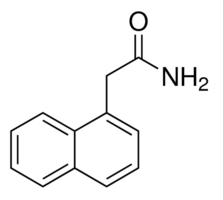
1- Naphthylacetamide
Price 100 INR
Minimum Order Quantity : 1 Kilograms
Molecular Weight : 186.2066 Grams (g)
Melting Point : 135 C
Molecular Formula : C12H10O2
Purity : 98%
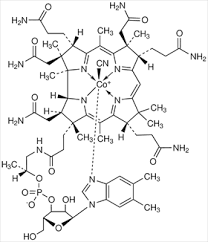
Cyanocobalamin
Price 100 INR
Minimum Order Quantity : 1 Kilograms
Molecular Weight : 1,355.38 Grams (g)
Melting Point : 300 °C (572 °F) +
Molecular Formula : C63H88CoN14O14P
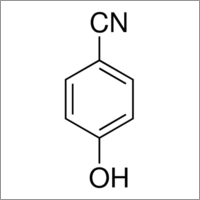
4-Hydroxybenzonitrile
Price 100 INR
Minimum Order Quantity : 1 Kilograms
Molecular Weight : 119.123 Grams (g)
Melting Point : 111.0 to 115.0 degC
Molecular Formula : C7H5NO
Purity : 99%
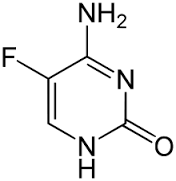
Flucytosine
Price 100 INR
Minimum Order Quantity : 1 Kilograms
Molecular Weight : 129.093 Grams (g)
Melting Point : (°C), 296 °C
Molecular Formula : C4H4FN3O
Purity : 99%

 Send Inquiry
Our Products


Kesarkunj, Rm No. 9, Vasanji Lalji Road, Kandivali (W), Mumbai - 400067, Maharashtra, India

Mr Nilesh Shah
(Director)
Mobile :08071630254
 Send Inquiry
 Send SMS
 Call Me Free
Developed and Managed by Infocom Network Private Limited.
