
Call us now :08071630254
 Send Inquiry
 Send Inquiry
Hypericin
MOQ : 1 Kilograms
Hypericin Specification
- Molecular Formula
- C30H16O8
- Usage
- Hypericin, hyperforin, and flavonoids are thought to be the major active constituents. This herb is most commonly associated with treatment of depression but eclectic physicians used it topically as a vulnerary and internally to treat neurogenic pain, including sciatica and rheumatic pain.
- Molecular Weight
- 504.44 Grams (g)
- Appearance
- Fine Powder
- Melting Point
- 299-301°C
Hypericin Trade Information
- Minimum Order Quantity
- 1 Kilograms
- Payment Terms
- Cash Advance (CA), Cash in Advance (CID)
- Supply Ability
- 500 Kilograms KG Per Month
- Delivery Time
- 2-8 Week
- Sample Available
- Yes
- Sample Policy
- Sample costs shipping and taxes has to be paid by the buyer
- Packaging Details
- Carton and Poly Bag.
- Main Export Market(s)
- Western Europe, Australia, North America, Eastern Europe, Central America, Africa, Middle East, South America, Asia
- Main Domestic Market
- All India
About Hypericin
Hypericinprimary pharmaceutical reference standardSynonym: 4,5,7,4,5,7-Hexahydroxy-2,2-dimethylnaphthodianthroneCAS Number548-04-9Empirical Formula (Hill Notation)C30H16O8Molecular Weight504.44PropertiesRelated CategoriesAlphabetical Index of Phytochemical Standards,Analytical Standards,Analytical/Chromatography,Cell Biology,E - H,Hypericum,Hypericum perforatum (St Johns wort),Nutrition Research,Phyto Primary Pharmaceutical Reference Standards and Extracts (Secondary Standards),Phytochemical Standards,Phytochemical Standards by Plant Genus,Phytochemicals by Plant (Food/Spice/Herb),QuinonesInChI Key BTXNYTINYBABQR-UHFFFAOYSA-NCofA certificate is enclosed in each packageshelf life limited shelf life, expiry date on the labelstorage temp. 20CFAQs of Hypericin:
Q: What is the molecular weight of Hypericin?
A: The molecular weight of Hypericin is 504.44 grams (g).Q: What is the melting point of Hypericin?
A: The melting point of Hypericin is 299-301C.Q: What is the molecular formula of Hypericin?
A: The molecular formula of Hypericin is C30H16O8.Q: What are the main constituents associated with Hypericins usage?
A: Hypericin, hyperforin, and flavonoids are thought to be the major active constituents.Q: What are the common applications of Hypericin?
A: Hypericin is most commonly associated with the treatment of depression and has been used topically as a vulnerary. It is also used internally to treat neurogenic pain, such as sciatica and rheumatic pain.Q: What is the physical appearance of Hypericin?
A: Hypericin appears as a fine powder.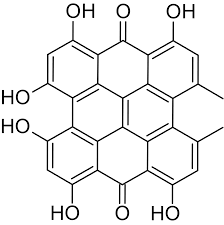
Tell us about your requirement

Price:
Quantity
Select Unit
- 50
- 100
- 200
- 250
- 500
- 1000+
Additional detail
Mobile number
Email

More Products in Analytical Grade Chemicals Category
Clostridium tetani guinea pig antiserum - for vaccines for human use
Price 100
Minimum Order Quantity : 1 Kilograms
Molecular Formula : N/A (biological preparation)
Molecular Weight : N/A (biological preparation)
Usage : Used as a reference antiserum in vaccine industry and laboratory testing
Density : 1.01 Gram per cubic centimeter(g/cm3)
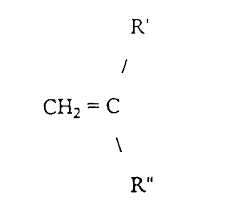
C7 - C40 Saturated Alkane Mixture
Molecular Formula : C7H16 to C40H82
Molecular Weight : Varies by specific alkane ranging from approximately 100 to 562 g/mol
Usage : Industrial applications including as a laboratory reagent blending component or for hydrophobic coatings
Density : 0.65 Gram per cubic centimeter(g/cm3)
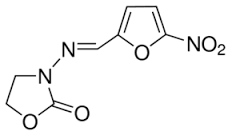
Furazolidone
Price 100 INR
Minimum Order Quantity : 1 Kilograms
Molecular Formula : C8H7N3O5
Usage : The treatment of diarrhea or enteritis caused by bacteria
Density : 1.7±0.1 g/cm
Free Cyanide IC Standard
Price 100 INR
Minimum Order Quantity : 1 Kilograms
Molecular Formula : CN−
Molecular Weight : 26.02 Grams (g)
Usage : In manufacturing, cyanide is used to make paper, textiles, and plastics. It is present in the chemicals used to develop photographs. Cyanide salts are used in metallurgy for electroplating, metal cleaning, and removing gold from its ore. Cyanide gas is used to exterminate pests and vermin in ships and buildings.

 Send Inquiry
Our Products


Kesarkunj, Rm No. 9, Vasanji Lalji Road, Kandivali (W), Mumbai - 400067, Maharashtra, India

Mr Nilesh Shah
(Director)
Mobile :08071630254
 Send Inquiry
 Send SMS
 Call Me Free
Developed and Managed by Infocom Network Private Limited.
