
Call us now :08071630254
 Send Inquiry
 Send Inquiry
(+)-Rose oxide
MOQ : 1 Kilograms
(+)-Rose oxide Specification
- Molecular Formula
- C10H18O
- Molecular Weight
- 154.25 g/mol
- Density
- 0.90.1 g/cm3
- Purity
- 99%
- Usage
- Used as an ingredient in cosmetics, personal care products, fragrances, cleaners, detergents, home care And perfumes
(+)-Rose oxide Trade Information
- Minimum Order Quantity
- 1 Kilograms
- Payment Terms
- Cash in Advance (CID), Cash Advance (CA)
- Supply Ability
- 500 Kilograms kg Per Month
- Delivery Time
- 2-8 Week
- Sample Available
- Yes
- Sample Policy
- Sample costs shipping and taxes has to be paid by the buyer
- Packaging Details
- Carton and Poly Bag.
- Main Export Market(s)
- Australia, North America, Eastern Europe, Africa, Middle East, South America, Western Europe, Asia, Central America
- Main Domestic Market
- All India
About (+)-Rose oxide
Supported by a team of our experienced professionals, we are engaged in manufacturing, exporting and supplying quality approved Rose oxide. The offered oxide is formulated with the aid of modern methods using quality tested chemical compounds at our in-house processing unit. This oxide is extensively used as a flavor and fragrance agents in cosmetic products. Furthermore, the provided Rose oxide can be purchased from us in various packaging options at reasonable prices.Features: Correct formulation Precise pH valueUnadulteratedLong shelf life (+)-Rose oxide analytical standard Synonym: (4S)-2-(2-Methyl-1-propenyl)-4-methyltetrahydropyran CAS Number 16409-43-1 Empirical Formula (Hill Notation) C10H18O Molecular Weight 154.25 grade analytical standard assay 99.0% (sum of enantiomers, mixture of isomers (cis+trans), GC) form neat optical activity []20/D +281, neat shelf life limited shelf life, expiry date on the label application(s) HPLC: suitable gas chromatography (GC): suitable refractive index n20/D 1.452(lit.) n20/D 1.454 bp 86C/20mmHg(lit.) density 0.866g/mLat 25C(lit.) format neatFAQs of (+)-Rose oxide:
Q: What is the purity level of (+)-Rose oxide?
A: The purity level of (+)-Rose oxide is 99%.Q: What is the molecular formula of (+)-Rose oxide?
A: The molecular formula of (+)-Rose oxide is C10H18O.Q: What is the molecular weight of (+)-Rose oxide?
A: The molecular weight of (+)-Rose oxide is 154.25 g/mol.Q: What are the common applications of (+)-Rose oxide?
A: (+)-Rose oxide is used as an ingredient in cosmetics, personal care products, fragrances, cleaners, detergents, home care products, and perfumes.Q: What is the density of (+)-Rose oxide?
A: The density of (+)-Rose oxide is 0.90.1 g/cm.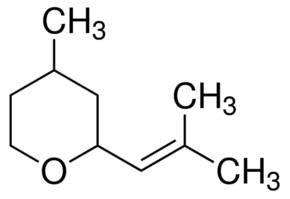
Tell us about your requirement

Price:
Quantity
Select Unit
- 50
- 100
- 200
- 250
- 500
- 1000+
Additional detail
Mobile number
Email

More Products in Analytical Grade Chemicals Category
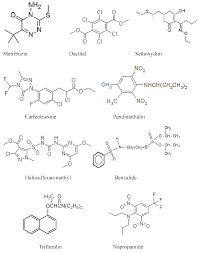
Herbicides - Sandy Loam 1
Purity : 95%
Molecular Weight : 243.65 g/mol
Molecular Formula : C8H10ClN5O3
Physical Form : Powder
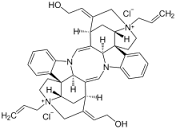
Alcuronium chloride
Price 100 INR
Minimum Order Quantity : 1 Kilograms
Purity : 98%
Molecular Weight : 737.8
Molecular Formula : C44H50Cl2N4O2
Physical Form : Powder

Iron oxide, reduced
Price 100 INR
Minimum Order Quantity : 1 Kilograms
Purity : 98%
Molecular Weight : 71.84 Grams (g)
Molecular Formula : FeO
Physical Form : Powder
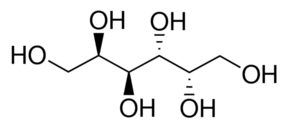
Galactitol Powder
Price 100 INR / Kilograms
Minimum Order Quantity : 1 Kilograms
Purity : 99%
Molecular Weight : 182.172 Grams (g)
Molecular Formula : C6H14O6
Physical Form : Solid

 Send Inquiry
Our Products


Kesarkunj, Rm No. 9, Vasanji Lalji Road, Kandivali (W), Mumbai - 400067, Maharashtra, India

Mr Nilesh Shah
(Director)
Mobile :08071630254
 Send Inquiry
 Send SMS
 Call Me Free
Developed and Managed by Infocom Network Private Limited.
