
Call us now :08071630254
 Send Inquiry
 Send Inquiry
()-Verapamil hydrochloride
MOQ : 1 , , Kilograms
()-Verapamil hydrochloride Specification
- Melting Point
- 138-140°C
- Molecular Weight
- 491.06
- Usage
- Treat high blood pressure. Lowering high blood pressure helps prevent strokes, heart attacks, and kidney problems.
- Molecular Formula
- C27H39ClN2O4
- Purity(%)
- 99%
()-Verapamil hydrochloride Trade Information
- Minimum Order Quantity
- 1 , , Kilograms
- Payment Terms
- Cash in Advance (CID), Cash Advance (CA)
- Supply Ability
- 500 Kilograms KG Per Month
- Delivery Time
- 2-8 Week
- Sample Available
- Yes
- Sample Policy
- Sample costs shipping and taxes has to be paid by the buyer
- Packaging Details
- Carton and Poly Bag.
- Main Export Market(s)
- Western Europe, Australia, Eastern Europe, Central America, Africa, Middle East, South America, Asia, North America
- Main Domestic Market
- All India
About ()-Verapamil hydrochloride
()-Verapamil hydrochloride Synonym: 5-[N-(3,4-Dimethoxyphenylethyl)methylamino]-2-(3,4-dimethoxyphenyl)-2-isopropylvaleronitrile hydrochloride Linear Formula: (CH3O)2C6H3CH2CH2N(CH3)(CH2)3C[C6H3(OCH3)2][CH(CH3)2]CN HClMolecular Weight: 491.06CAS Number: 152-11-4assay 99% (titration) form powder color white mp 142 C (dec.)(lit.) solubility methanol: soluble50mg/mL ethanol: soluble originator Pfizer Gene Information human ... ADRA1A(148), ADRA1B(147), ADRA1D(146)Description Packaging 1, 5, 10 g in glass bottle Biochem/physiol Actions 1-adrenoceptor antagonist; L-type calcium channel blocker. Blocks L-type Ca2+ channels in smooth and cardiac muscle, induces apoptosis of human primary and metastatic colon adenocarcinoma cells in vitro. Drug resistance reversal agent acting on Pgp, e.g. decrease renal tubule elimination of digoxin. Increases basal ATPase activity of Pgp. Substrate of Cyp3A4 and CYP2C6. Features and Benefits This compound is a featured product for ADME Tox research. This compound is also offered as part of Sigmas Library of Pharmacologically Active Compounds (LOPAC), a biologically annotated collection of high-quality, ready-to-screen compounds. This compound is featured on the Calcium Channels page of the Handbook of Receptor Classification and Signal Transduction. This compound was developed by Pfizer.FAQs of ()-Verapamil hydrochloride:
Q: What is the molecular formula of -Verapamil hydrochloride?
A: The molecular formula of -Verapamil hydrochloride is C27H39ClN2O4.Q: What is the molecular weight of -Verapamil hydrochloride?
A: The molecular weight of -Verapamil hydrochloride is 491.06.Q: What is the melting point of -Verapamil hydrochloride?
A: The melting point of -Verapamil hydrochloride is 138-140C.Q: What is the purity of -Verapamil hydrochloride?
A: The purity of -Verapamil hydrochloride is 99%.Q: What is the usage of -Verapamil hydrochloride?
A: -Verapamil hydrochloride is used to treat high blood pressure. Lowering high blood pressure helps prevent strokes, heart attacks, and kidney problems.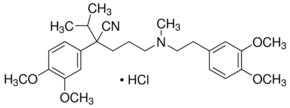
Tell us about your requirement

Price:
Quantity
Select Unit
- 50
- 100
- 200
- 250
- 500
- 1000+
Additional detail
Mobile number
Email

More Products in Biochemical & Reagents Category

1- (4-Methoxyphenyl)-6-phenylhexatriene
Purity(%) : TBD
Molecular Formula : TBD
Storage : TBD, Other
Usage : TBD

()-SKF-38393 hydrochloride
Price 100 INR / Kilograms
Minimum Order Quantity : 1 Kilograms
Purity(%) : 95%
Molecular Formula : C16H17NO2 HCl
Storage : Room temperature
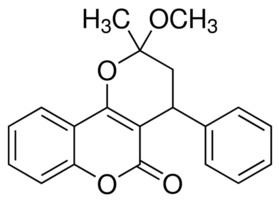
Pyranocoumarin (C20H18O4)
Price 100 INR
Minimum Order Quantity : 1 Kilograms
Purity(%) : 98%
Molecular Formula : C20H18O4
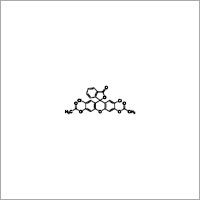
2,7-Dichlorofluorescein diacetate
Price 100 INR
Minimum Order Quantity : 1 Kilograms
Purity(%) : ≥97%
Molecular Formula : C24H14Cl2O7
Usage : It is used as an indicator for argentometry by Fajans method. It is also used in the cellular antioxidant activity (CAA) assay. Dichlorofluorescin (DCFH) is a probe that is trapped within cells and is easily oxidized to fluorescent dichlorofluorescein (DCF).

 Send Inquiry
Our Products


Kesarkunj, Rm No. 9, Vasanji Lalji Road, Kandivali (W), Mumbai - 400067, Maharashtra, India

Mr Nilesh Shah
(Director)
Mobile :08071630254
 Send Inquiry
 Send SMS
 Call Me Free
Developed and Managed by Infocom Network Private Limited.
