
Call us now :08071630254
 Send Inquiry
![1,1-{[2-(2-Methoxyphenoxy)ethyl]nitrilo}bis[3-(9H-carbazol-4-yloxy)-propan-2-ol] Share](https://tiimg.tistatic.com/new_website1/design2025/product-details/marketeq_share-alt-5.svg)
 Send Inquiry
1,1-{[2-(2-Methoxyphenoxy)ethyl]nitrilo}bis[3-(9H-carbazol-4-yloxy)-propan-2-ol]
MOQ : 1 , , Kilograms
1,1-{[2-(2-Methoxyphenoxy)ethyl]nitrilo}bis[3-(9H-carbazol-4-yloxy)-propan-2-ol] Specification
- Smell
- Odorless
- Ingredients
- 9H-carbazol-4-yloxy-propan-2-ol, 2-(2-methoxyphenoxy)ethylamine
- Properties
- Complex organic molecule, contains carbazole subunits and ether linkages
- Storage
- Store in a cool, dry, and dark place; tightly sealed
- Product Type
- Organic Compound
- Application
- Advanced materials research, organic electronics, fluorescent probes
- Molecular Formula
- C40H39N3O6
- Molecular Weight
- 657.76 g/mol
- Shape
- Crystalline
- Grade
- Research/Analytical
- Ph Level
- Not determined
- CAS No
- NA (custom synthetic compound, not officially registered)
- Poisonous
- No information available; handle with care in laboratory
- Density
- 1.27 Gram per cubic centimeter(g/cm3)
- Shelf Life
- 2 years under recommended storage
- Physical Form
- Solid
- Structural Formula
- Refer to image URL https://cpimg.tistatic.com/3368410/s/5/11-2-2-Methoxyphenoxy-ethyl-nitrilo-bis-3-9H-carbazol-4-yloxy-propan-2-ol-.png
- Taste
- Not determined
- Purity
- >98% (HPLC)
- HS Code
- 294200
- Solubility
- Soluble in DMSO, DMF, moderate in ethanol; insoluble in water
- Melting Point
- 162-165C
- Appearance
- Light yellow to beige powder
- Usage
- For research and development; not for drug use
- Refractive Rate
- Not applicable (solid)
- Spectral Data
- 1H NMR, 13C NMR, MS available upon request
- Packaging
- Supplied in amber glass bottle, inert atmosphere packing
- Toxicological Data
- No known acute toxicity, but handle as laboratory chemical
- Biodegradability
- Not biodegradable; dispose per chemical waste protocols
- Compatibility
- Compatible with organic solvents; avoid strong acids/bases
- Supplier Ref
- TisTac 3368410
- Compliance Standard
- Meets analytical purity standard for laboratory use
- Isomerism
- Single defined isomer
- Thermal Stability
- Stable up to 150C
- Light Stability
- Good photostability under ambient laboratory conditions
- Synonyms
- Carbazole bis-ether with methoxyphenoxyethyl bridge
- Chemical Family
- Carbazole derivatives
- Precautions
- Wear gloves and eye protection; avoid inhalation
1,1-{[2-(2-Methoxyphenoxy)ethyl]nitrilo}bis[3-(9H-carbazol-4-yloxy)-propan-2-ol] Trade Information
- Minimum Order Quantity
- 1 , , Kilograms
- Payment Terms
- Cash in Advance (CID), Cash Advance (CA)
- Supply Ability
- 500 Kilograms Per Month
- Delivery Time
- 2-8 Week
- Sample Available
- Yes
- Sample Policy
- Sample costs shipping and taxes has to be paid by the buyer
- Packaging Details
- Carton and Poly Bag.
- Main Export Market(s)
- Western Europe, Australia, Eastern Europe, Central America, Africa, Middle East, South America, Asia, North America
- Main Domestic Market
- All India
About 1,1-{[2-(2-Methoxyphenoxy)ethyl]nitrilo}bis[3-(9H-carbazol-4-yloxy)-propan-2-ol]
1,1-{[2-(2-Methoxyphenoxy)ethyl]nitrilo}bis[3-(9H-carbazol-4-yloxy)-propan-2-ol]
Pharmaceutical impurity standard
Synonym: 3,3-[2-(2-Methoxyphenoxy)ethylazanediyl]bis[1-(9H-carbazol-4-yloxy)propan-2-ol], Carvedilol Bis-carbazole, Carvedilol Related Compound B (USP), Carvedilol impurity B (PhEur)
-
CAS Number 918903-20-5
-
Empirical Formula (Hill Notation) C39H39N3O6
-
Molecular Weight 645.74
| grade | analytical standard |
| assay | 90.0% (HPLC) |
| form | neat |
| shelf life | limited shelf life, expiry date on the label |
| application(s) | HPLC: suitable |
| gas chromatography (GC): suitable | |
| impurities | 10% related substances |
| 5% inorganic material | |
| 5% residual solvents | |
| 5.0 wt. % water | |
| format | neat |
Innovative Structure for Advanced Applications
Featuring a unique methoxyphenoxyethyl bridge and carbazole subunits, this molecule offers excellent stability in both light and heat, lending itself well to research in organic electronics and fluorescence studies. Its single, well-defined isomer enhances experimental reproducibility for precise analytical work.
Safe Handling and Reliable Packaging
Every batch is packaged in amber glass under an inert atmosphere, preserving compound integrity. While there is no known acute toxicity, protective gloves and eye wear are recommended. The compound shows no odor and is non-volatile, streamlining laboratory handling procedures.
Exceptional Purity and Data Support
Purity is confirmed via HPLC to exceed 98%, supporting high-precision research. Comprehensive spectral data (1H NMR, 13C NMR, MS) are available on request for thorough analytical verification of structure and composition. This ensures confidence in every experiment.
FAQs of 1,1-{[2-(2-Methoxyphenoxy)ethyl]nitrilo}bis[3-(9H-carbazol-4-yloxy)-propan-2-ol]:
Q: How should I store 1,1-{[2-(2-Methoxyphenoxy)ethyl]nitrilo}bis[3-(9H-carbazol-4-yloxy)-propan-2-ol]?
A: Store the compound in a tightly sealed amber glass container, placed in a cool, dry, and dark area. Proper storage ensures chemical stability and extends shelf life up to two years under these conditions.Q: What safety precautions are recommended during handling?
A: Wear appropriate gloves and eye protection, and avoid inhaling dust. Although no acute toxicity is known, this chemical should be handled in accordance with standard laboratory chemical safety protocols.Q: When and where is this compound typically used?
A: This carbazole derivative is primarily used in academic and industrial labs engaged in advanced materials research, particularly for organic electronics and fluorescent probes. It is intended exclusively for research and development, not for pharmaceutical applications.Q: What is the process for disposal if this compound is no longer needed?
A: As the product is not biodegradable, dispose of it according to institutional chemical waste protocols. Never discard with general waste or down drains; consult local regulations for hazardous waste management.Q: How does the compound benefit research applications?
A: Its excellent thermal and photostability, high purity, and defined structural isomerism provide reliable experimental data, making it ideal for studies requiring consistent fluorescence or advanced material characteristics.Q: What solvents is this compound compatible with for experimental use?
A: It dissolves readily in DMSO and DMF and shows moderate solubility in ethanol. However, it is incompatible with strong acids or bases and is insoluble in water, thus selection of solvent should suit your experimental setup.Q: Where can I obtain spectral data related to this material?
A: Spectral data including 1H NMR, 13C NMR, and mass spectrometry can be requested from the supplier or trader. These analytical datasets are provided to support structure verification and purity assessment.![1,1-{[2-(2-Methoxyphenoxy)ethyl]nitrilo}bis[3-(9H-carbazol-4-yloxy)-propan-2-ol]](https://cpimg.tistatic.com/03368410/b/5/1-1-2-2-Methoxyphenoxy-ethyl-nitrilo-bis-3-9H-carbazol-4-yloxy-propan-2-ol-.png)
Tell us about your requirement

Price:
Quantity
Select Unit
- 50
- 100
- 200
- 250
- 500
- 1000+
Additional detail
Mobile number
Email

More Products in Analytical Grade Chemicals Category
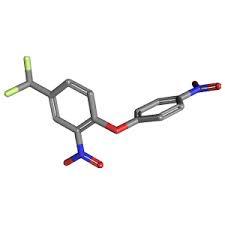
Fluorodifen
Price 100 INR
Minimum Order Quantity : 1 Kilograms
Melting Point : 25 to 26 C (77 to 79 F; 298 to 299 K)
Purity : 98%
Molecular Formula : C13H7F3N2O5
Molecular Weight : 328.2 Grams (g)
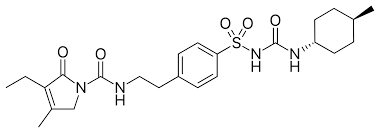
Glimepiride
Price 100 INR
Minimum Order Quantity : 1 Kilograms
Melting Point : 207 C [2,4,6].
Purity : 99.99%
Molecular Formula : C24H34N4O5S
Molecular Weight : 490.6 Grams (g)

Yangonin Solution
Price 10 INR
Minimum Order Quantity : 1 Kilograms
Melting Point : 155157C
Purity : 98%
Molecular Formula : C15H14O4
Molecular Weight : 258.27 Grams (g)

 Send Inquiry
Our Products


Kesarkunj, Rm No. 9, Vasanji Lalji Road, Kandivali (W), Mumbai - 400067, Maharashtra, India

Mr Nilesh Shah
(Director)
Mobile :08071630254
 Send Inquiry
 Send SMS
 Call Me Free
Developed and Managed by Infocom Network Private Limited.
