
Call us now :08071630254
 Send Inquiry
 Send Inquiry
2,2-Azino-bis(3-ethylbenzothiazoline-6-sulfonic acid)
2,2-Azino-bis(3-ethylbenzothiazoline-6-sulfonic acid) Specification
- Usage
- Commonly used in colorimetric assays for enzyme-linked immunosorbent assays (ELISA) and spectrophotometric analysis
- Shelf Life
- 2 years under recommended storage conditions Years
- Molecular Weight
- 514.62 g/mol Grams (g)
- Appearance
- Powder
- HS Code
- 2934.20.00
- Melting Point
- Decomposes before melting
- Storage
- Store at 2-8C protected from light and moisture
- Ph Level
- Neutral to slightly acidic (pH ~6-7 in solution)
- Physical Form
- Solid
- Poisonous
- No
- Molecular Formula
- C18H18N4O6S4
- Other Names
- ABTS
- Shape
- Amorphous
- Application
- Used as a substrate in enzymatic assays primarily for peroxidase activity in biochemistry
- Smell
- Other
- Structural Formula
- Provided upon request
- Classification
- Organic Compound
- Chemical Name
- 22-Azino-bis(3-ethylbenzothiazoline-6-sulfonic acid)
- CAS No
- 30931-67-0
- Type
- Chemical Reagent
- Purity(%)
- 98%
- EINECS No
- 250-431-6
- Color
- Green (when oxidized)
About 2,2-Azino-bis(3-ethylbenzothiazoline-6-sulfonic acid)
2,2-Azino-bis(3-ethylbenzothiazoline-6-sulfonic acid) (commonly known as ABTS) is an organic compound extensively used as a chemical reagent in biochemistry. Available in amorphous powder form, this substrate is designed for enzymatic assays, particularly to measure peroxidase activity in colorimetric and spectrophotometric techniques, such as enzyme-linked immunosorbent assays (ELISA). ABTS exhibits a green color when oxidized and delivers reliable performance due to its high purity of 98%. The compound is neutral to slightly acidic in solution (pH ~6-7) and decomposes before melting. It has a molecular weight of 514.62 g/mol and a molecular formula of C18H18N4O6S4. For optimal longevity and effectiveness, it is advised to store ABTS at 2-8C while protecting it from light and moisture, ensuring a 2-year shelf life under recommended conditions. This non-poisonous chemical provides precision in biochemical applications and supports critical advancements in the field of enzymology.
FAQs of 2,2-Azino-bis(3-ethylbenzothiazoline-6-sulfonic acid):
Q: What is the recommended storage condition for 2,2-Azino-bis(3-ethylbenzothiazoline-6-sulfonic acid)?
A: The product should be stored at 2-8C, protected from light and moisture.Q: What is the primary application of ABTS?
A: ABTS is primarily used as a substrate in enzymatic assays to measure peroxidase activity.Q: Is ABTS poisonous?
A: No, ABTS is non-poisonous.Q: What is the typical appearance of ABTS?
A: ABTS is supplied in powder form and appears green when oxidized.Q: What is the purity level of ABTS?
A: ABTS has a purity of 98%.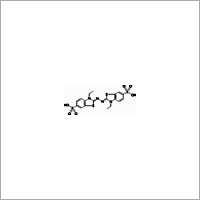
Tell us about your requirement

Price:
Quantity
Select Unit
- 50
- 100
- 200
- 250
- 500
- 1000+
Additional detail
Mobile number
Email

More Products in Biochemical & Reagents Category

(+)-3-Hydroxymorphinan hydrobromide
Price 100 INR / Kilograms
Minimum Order Quantity : 1 Kilograms
Chemical Name : Other, (+)3Hydroxymorphinan hydrobromide
Molecular Formula : C16H21NO
Molecular Weight : 243.344 Grams (g)
Purity(%) : 98%
()-Bay K8644
Price 100 INR / Kilograms
Minimum Order Quantity : 1 Kilograms
Chemical Name : Other, ()Bay K8644
Molecular Weight : 356.301 GSM (gm/2)
Purity(%) : 98%

13 -cis-Retinal
Price 100 INR / Kilograms
Minimum Order Quantity : 1 Kilograms
Molecular Formula : C20H28O
Molecular Weight : 284.443 Grams (g)
Purity(%) : 98%

1,2-Dihexadecanoyl-rac-glycero-3-phospho-rac-(1-glycerol) ammonium salt
Price 100 INR
Minimum Order Quantity : 1 Kilograms
Chemical Name : 1,2Dihexadecanoylracglycero3phosphorac(1glycerol) ammonium salt, Other
Molecular Formula : C40H80NO8P
Molecular Weight : 734.039 Grams (g)
Purity(%) : 99%

 Send Inquiry
Our Products


Kesarkunj, Rm No. 9, Vasanji Lalji Road, Kandivali (W), Mumbai - 400067, Maharashtra, India

Mr Nilesh Shah
(Director)
Mobile :08071630254
 Send Inquiry
 Send SMS
 Call Me Free
Developed and Managed by Infocom Network Private Limited.
