
Call us now :08071630254
 Send Inquiry
 Send Inquiry
2,3,4 -Trichlorophenol
MOQ : 1 Kilograms
2,3,4 -Trichlorophenol Specification
- Appearance
- yellow-whitish lumps or powder
- Molecular Formula
- C6H2Cl3OH
- Melting Point
- 69 C
- Purity
- 99.3%
- Physical Form
- Powder
- Usage
- Trichlorophenol is used as an insecticide, fungicide, herbicide, bactericide, germicide, wood and glue preservative, anti-mildew agent for textiles, defoliant, It is used as a chemical intermediate for the synthesis of other pesticides.
- Molecular Weight
- 197.45 Grams (g)
2,3,4 -Trichlorophenol Trade Information
- Minimum Order Quantity
- 1 Kilograms
- Payment Terms
- Cash in Advance (CID), Cash Advance (CA)
- Supply Ability
- 500 Kilograms Per Month
- Delivery Time
- 2-8 Week
- Sample Available
- Yes
- Sample Policy
- Sample costs shipping and taxes has to be paid by the buyer
- Packaging Details
- Carton and Poly Bag.
- Main Export Market(s)
- Middle East, Western Europe, Africa, Central America, Eastern Europe, South America, Asia, North America, Australia
- Main Domestic Market
- All India
About 2,3,4 -Trichlorophenol
2,3,4-Trichlorophenol PESTANAL, analytical standard CAS Number 15950-66-0 Linear Formula Cl3C6H2OH Molecular Weight 197.45 grade analytical standard product line PESTANAL form neat application(s) HPLC: suitable gas chromatography (GC): suitable impurities 0.5% water (Karl Fischer) mp 75-79C(lit.) 75-79C suitability passes test for identity (NMR) format neatFAQs of 2,3,4 -Trichlorophenol:
Q: What is the physical form of 2,3,4-Trichlorophenol?
A: The physical form of 2,3,4-Trichlorophenol is a powder.Q: What is the melting point of 2,3,4-Trichlorophenol?
A: The melting point of 2,3,4-Trichlorophenol is 69C.Q: What is the purity of 2,3,4-Trichlorophenol?
A: The purity of 2,3,4-Trichlorophenol is 99.3%.Q: What does 2,3,4-Trichlorophenol look like?
A: 2,3,4-Trichlorophenol appears as yellow-whitish lumps or powder.Q: What are the uses of 2,3,4-Trichlorophenol?
A: 2,3,4-Trichlorophenol is used as an insecticide, fungicide, herbicide, bactericide, germicide, wood and glue preservative, anti-mildew agent for textiles, defoliant, and as a chemical intermediate for the synthesis of other pesticides.Q: What is the molecular weight of 2,3,4-Trichlorophenol?
A: The molecular weight of 2,3,4-Trichlorophenol is 197.45 grams (g).Q: What is the molecular formula of 2,3,4-Trichlorophenol?
A: The molecular formula of 2,3,4-Trichlorophenol is C6H2Cl3OH.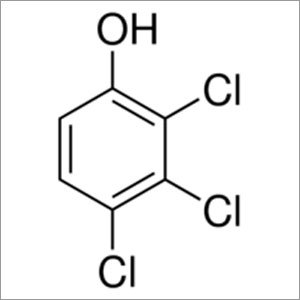
Tell us about your requirement

Price:
Quantity
Select Unit
- 50
- 100
- 200
- 250
- 500
- 1000+
Additional detail
Mobile number
Email

More Products in Analytical Grade Chemicals Category
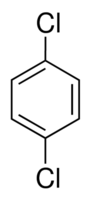
1,4-Dichlorobenzene
Price 100 INR
Minimum Order Quantity : 1 Kilograms
Purity : 99.8%
Molecular Weight : 147.01 Grams (g)
Molecular Formula : C6H4Cl2
Usage : Paradichlorobenzene is used as a fumigant insecticide to control clothes moths. It is also found in deodorant blocks made for trash cans and toilets. Paradichlorobenzene was first registered for use in the United States in 1942, and it is sometimes called 1,4dichlorobenzene.
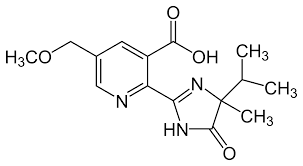
Imazamox
Price 100 INR
Minimum Order Quantity : 1 Kilograms
Purity : 98%
Molecular Weight : 305.33 Grams (g)
Molecular Formula : C15H19N3O4
Usage : CHEMICAL DESCRIPTION: Raptor Herbicide is a waterbased formulation containing a new active ingredient (AI), the ammonium salt of imazamox. Raptor is used for postemergence control of broadleaf weeds and grass in alfalfa, edible legumes, and soybeans.
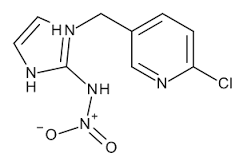
Imidacloprid-olefin
Price 100 INR
Minimum Order Quantity : 1 Kilograms
Purity : 97%
Molecular Weight : 253.65 Grams (g)
Molecular Formula : CHClNO
Usage : Imidacloprid is used to control sucking insects, some chewing insects including termites, soil insects, and fleas on pets. In addition to its topical use on pets, imidacloprid may be applied to structures, crops, soil, and as a seed treatment.
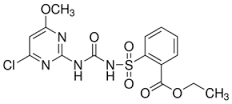
Chlorimuron ethyl
Price 100 INR
Minimum Order Quantity : 1 , , Kilograms
Purity : 98%
Molecular Weight : 414.8
Molecular Formula : C15H15ClN4O6S

 Send Inquiry
Our Products


Kesarkunj, Rm No. 9, Vasanji Lalji Road, Kandivali (W), Mumbai - 400067, Maharashtra, India

Mr Nilesh Shah
(Director)
Mobile :08071630254
 Send Inquiry
 Send SMS
Developed and Managed by Infocom Network Private Limited.
