
Call us now :08071630254
 Send Inquiry
 Send Inquiry
Basic Red 9
Basic Red 9 Specification
- Molecular Formula
- C15H16N3Cl
- CAS No
- 569-61-9
- Properties
- Bright red color easily soluble effective dye agent
- Purity
- 96%
- Refractive Rate
- 1.59 (approx.)
- Taste
- Bitter
- Melting Point
- 200-210C
- Molecular Weight
- 273.76 g/mol
- Shelf Life
- 2 years under recommended conditions
- Grade
- Industrial Grade
- Density
- 1.3 Gram per cubic centimeter(g/cm3)
- Usage
- Primarily for industrial and research applications
- Poisonous
- YES
- Appearance
- Bright red powder
- Application
- Used as a dye in textile and ink industries; also used in biological staining
- Structural Formula
- C15H16N3Cl
- HS Code
- 3204.12
- Physical Form
- Powder
- Storage
- Store in a cool dry place away from light and moisture
- Solubility
- Soluble in water and ethanol
- Ph Level
- Neutral to slightly alkaline
- Ingredients
- Basic Red Dye composed of C15H16N3Cl
- Smell
- Odorless
- Shape
- Fine crystalline powder
- EINECS No
- 209-321-2
About Basic Red 9
Basic Red 9 Synonym: Basic Fuchsin, Basic Parafuchsin, Basic Red 9, Magenta O, Parafuchsin hydrochloride, Paramagenta hydrochloride, Pararosaniline chloride, Pararosaniline hydrochloride Empirical Formula (Hill Notation): C19H17N3 HClMolecular Weight: 323.82CAS Number: 569-61-9 grade analytical standard assay 98.0% (HPLC) form neat application(s) HPLC: suitable gas chromatography (GC): suitable mp 265-273C 268-270C (dec.)(lit.) format neatFAQs of Basic Red 9:
Q: What are the storage conditions for Basic Red 9?
A: Basic Red 9 should be stored in a cool, dry place away from light and moisture.Q: What is the molecular composition and appearance of Basic Red 9?
A: Basic Red 9 is composed of C15H16N3Cl and appears as a bright red powder.Q: Can Basic Red 9 be used for biological staining?
A: Yes, Basic Red 9 is commonly used for biological staining, as well as in textile and ink industries.Q: Is Basic Red 9 soluble? If yes, what solvents is it soluble in?
A: Yes, Basic Red 9 is soluble in water and ethanol.Q: What is the shelf life of Basic Red 9 under recommended storage conditions?
A: The shelf life of Basic Red 9 is 2 years if stored under recommended conditions.Q: Is Basic Red 9 suitable for consumption or safe for general use?
A: No, Basic Red 9 is poisonous and is intended primarily for industrial and research applications only.Q: What is the purity level and pH nature of Basic Red 9?
A: Basic Red 9 has a purity of 96% and is neutral to slightly alkaline in pH.
Tell us about your requirement

Price:
Quantity
Select Unit
- 50
- 100
- 200
- 250
- 500
- 1000+
Additional detail
Mobile number
Email

More Products in Analytical Grade Chemicals Category
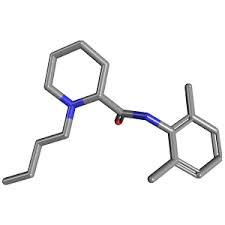
Desbutylbupivacaine
Molecular Formula : C17H26N2O
Molecular Weight : 274.4 g/mol
Purity : 99%
Melting Point : 8890C
![6-[Bis(2,2,2-trifluoroethyl)amino]-4-(trifluoromethyl)-2(1H)-quinolinone](https://cpimg.tistatic.com/03411512/b/4/6-Bis-2-2-2-trifluoroethyl-amino-4-trifluoromethyl-2-1H-quinolinone.png)
6-[Bis(2,2,2-trifluoroethyl)amino]-4-(trifluoromethyl)-2(1H)-quinolinone
Molecular Formula : C14H8F9N2O
Molecular Weight : 392.21 g/mol
Purity : >98%
Melting Point : 183187C
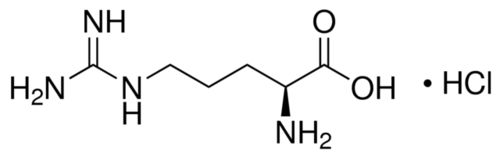
Arginine hydrochloride
Price 100 INR
Minimum Order Quantity : 1 Kilograms
Molecular Formula : C6H15ClN4O2
Molecular Weight : 210.66 Grams (g)
Melting Point : 223224C
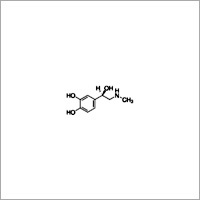
Adrenaline with impurity F
Price 100 INR
Minimum Order Quantity : 1 , , Kilograms
Molecular Formula : C9H13NO3
Molecular Weight : 183.204 Grams (g)
Purity : 99%
Melting Point : 211.5 C

 Send Inquiry
Our Products


Kesarkunj, Rm No. 9, Vasanji Lalji Road, Kandivali (W), Mumbai - 400067, Maharashtra, India

Mr Nilesh Shah
(Director)
Mobile :08071630254
 Send Inquiry
 Send SMS
 Call Me Free
Developed and Managed by Infocom Network Private Limited.
