
Call us now :08071630254
 Send Inquiry
 Send Inquiry
Carbon-13C tetrachloride
Carbon-13C tetrachloride Specification
- Ph Level
- Neutral (does not significantly affect pH)
- Storage
- Store in a cool dry and well-ventilated area away from incompatible materials and strong oxidizers. Keep tightly closed.
- Shelf Life
- Stable under recommended storage conditions. Check the manufacturers guidelines.
- Appearance
- Clear colorless liquid
- HS Code
- 290319
- Molecular Weight
- 153.82 g/mol
- Application
- Used in research involving Carbon-13 isotope labeling NMR spectroscopy and organic synthesis
- Smell
- Sweet and pleasant odor
- EINECS No
- 200-262-8
- CAS No
- 56-23-5
- Ingredients
- 100% Carbon-13 enriched tetrachloromethane
- Grade
- Research Grade
- Molecular Formula
- CCl4
- Structural Formula
- CCl4
- Melting Point
- -23 C
- Physical Form
- Liquid
- Purity
- >99%
- Refractive Rate
- 1.4605
- Properties
- Non-flammable liquid volatile and toxic
- Poisonous
- YES
- Usage
- Primarily used as a solvent and an intermediate in organic chemical reactions
- Density
- 1.5867 Gram per cubic centimeter(g/cm3)
- Solubility
- Slightly soluble in water (1.2 g/L at 25 C) soluble in organic solvents
- Shape
- Liquid form
About Carbon-13C tetrachloride
Carbon-13C tetrachlorideCAS Number32488-50-9Linear Formula13CCl4Molecular Weight154.82isotopic purity 99atom %13Cassay 99% (CP)refractive index n20/D1.46(lit.)bp 76-77C(lit.)mp 23C(lit.)density 1.604g/mLat 25C(lit.)mass shift M+1FAQs of Carbon-13C tetrachloride:
Q: What is the physical form and appearance of Carbon-13C tetrachloride?
A: The physical form of Carbon-13C tetrachloride is a liquid, and its appearance is a clear, colorless liquid.Q: How should Carbon-13C tetrachloride be stored for optimal stability?
A: Carbon-13C tetrachloride should be stored in a cool, dry, and well-ventilated area away from incompatible materials and strong oxidizers. Ensure the container is tightly closed.Q: What are the primary applications of Carbon-13C tetrachloride?
A: This product is primarily used in research involving Carbon-13 isotope labeling, NMR spectroscopy, and organic synthesis. Additionally, it serves as a solvent and an intermediate in organic chemical reactions.Q: Is Carbon-13C tetrachloride soluble in water?
A: Carbon-13C tetrachloride is slightly soluble in water, with a solubility of 1.2 g/L at 25C. It is more soluble in organic solvents.Q: Is Carbon-13C tetrachloride non-flammable?
A: Yes, Carbon-13C tetrachloride is a non-flammable liquid but is volatile and toxic. Proper handling and storage are essential.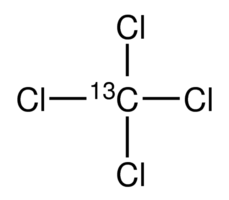
Tell us about your requirement

Price:
Quantity
Select Unit
- 50
- 100
- 200
- 250
- 500
- 1000+
Additional detail
Mobile number
Email

More Products in Analytical Grade Chemicals Category
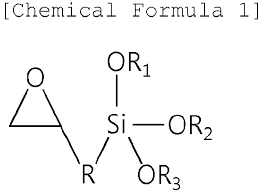
Conductivity Standard
Price 100 INR
Minimum Order Quantity : 1 , , Kilograms
Molecular Weight : 74.55 g/mol (KCl)
Molecular Formula : KCl (in HO)
Usage : For precise calibration, maintenance and verification of laboratory conductivity sensors
Melting Point : Not applicable for solution
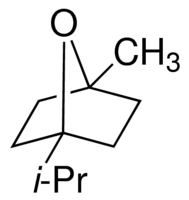
1,4-Cineole Solution
Price 100 INR
Minimum Order Quantity : 1 Kilograms
Molecular Weight : 154.249 Grams (g)
Molecular Formula : C10H18O
Usage : Flavoring and fragrance. Because of its pleasant, spicy aroma and taste, eucalyptol is used in flavorings, fragrances, and cosmetics. Cineolebased eucalyptus oil is used as a flavouring at low levels (0.002%) in various products, including baked goods, confectionery, meat products, and beverages.
Melting Point : 1.5 C
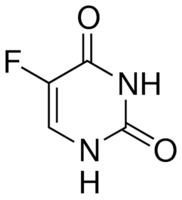
5-Fluorouracil
Price 100 INR
Minimum Order Quantity : 1 Kilograms
Molecular Weight : 130.077 Grams (g)
Molecular Formula : C4H3FN2O2
Usage : Fluorouracil works by causing the death of cells which are growing fastest, such as abnormal skin cells. Fluorouracil topical (for the skin) is used to treat scaly overgrowths of skin (actinic or solar keratoses). Fluorouracil topical may also be used in the treatment of superficial basal cell carcinoma.
Melting Point : 282–283 °C (540–541 °F)
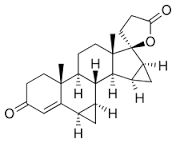
Drospirenone
Price 100 INR
Minimum Order Quantity : 1 Kilograms
Molecular Weight : 366.5 Grams (g)
Molecular Formula : C20H24O2
Usage : Drospirenone and ethinyl estradiol is used as contraception to prevent pregnancy. This medicine is also used to treat moderate acne in women who are at least 14 years old and have started having menstrual periods, and who wish to use birth control pills.

 Send Inquiry
Our Products


Kesarkunj, Rm No. 9, Vasanji Lalji Road, Kandivali (W), Mumbai - 400067, Maharashtra, India

Mr Nilesh Shah
(Director)
Mobile :08071630254
 Send Inquiry
 Send SMS
Developed and Managed by Infocom Network Private Limited.
