
Call us now :08071630254
 Send Inquiry
 Send Inquiry
Chloranil
MOQ : 1 , , Kilograms
Chloranil Specification
- Purity
- 98%
- Molecular Weight
- 245.88 Grams (g)
- Molecular Formula
- C6Cl4O2
- Usage
- Chloroanil serves as a hydrogen acceptor. It is more electrophilic than quinone itself. It is used for the aromatization reactions, such as the conversion of cyclohexadienes to the benzene derivatives. Chloranil is used to test for free secondary amines.
- Appearance
- Yellow solid
Chloranil Trade Information
- Minimum Order Quantity
- 1 , , Kilograms
- Payment Terms
- Cash in Advance (CID), Cash Advance (CA)
- Supply Ability
- 500 Kilograms Per Month
- Delivery Time
- 3-4 Week
- Sample Available
- Yes
- Sample Policy
- Sample costs shipping and taxes has to be paid by the buyer
- Main Export Market(s)
- Australia, North America, Eastern Europe, Middle East, Central America, South America, Western Europe, Asia, Africa
- Main Domestic Market
- All India
About Chloranil
Chloranil Synonym: Tetrachloro-p-benzoquinone CAS Number 118-75-2 Empirical Formula (Hill Notation) C6Cl4O2 Molecular Weight 245.88 grade analytical standard form neat application(s) HPLC: suitable gas chromatography (GC): suitable format neatFAQs of Chloranil:
Q: What is the molecular formula of Chloranil?
A: The molecular formula of Chloranil is C6Cl4O2.Q: What is the appearance of Chloranil?
A: Chloranil appears as a yellow solid.Q: What is the purity of Chloranil?
A: The purity of Chloranil is 98%.Q: What is the molecular weight of Chloranil?
A: The molecular weight of Chloranil is 245.88 grams (g).Q: What are the primary usage applications of Chloranil?
A: Chloranil serves as a hydrogen acceptor and is more electrophilic than quinone. It is used for aromatization reactions, such as converting cyclohexadienes to benzene derivatives, and is also employed to test for free secondary amines.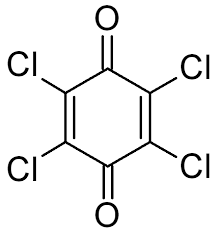
Tell us about your requirement

Price:
Quantity
Select Unit
- 50
- 100
- 200
- 250
- 500
- 1000+
Additional detail
Mobile number
Email

More Products in Analytical Grade Chemicals Category
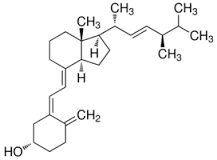
Ergocalciferol (Vitamin D2)
Price 100 INR
Minimum Order Quantity : 1 Kilograms
Melting Point : 114 °C
Molecular Weight : 397 Grams (g)
Usage : Ergocalciferol Capsules, USP are indicated for use in the treatment of hypoparathyroidism, refractory rickets, also known as vitamin D resistant rickets, and familial hypophosphatemia.
Molecular Formula : C28H44O
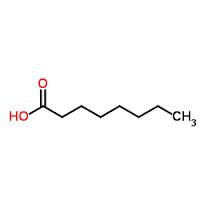
Caprylic Acid (Octanoic Acid)
Price 100 INR
Minimum Order Quantity : 1 , , Kilograms
Melting Point : 16.7 °C (62.1 °F; 289.8 K)
Molecular Weight : 144.21 Grams (g)
Usage : It has a role as an antibacterial agent, a human metabolite and an Escherichia coli metabolite. It is a straightchain saturated fatty acid and a mediumchain fatty acid. It is a conjugate acid of an octanoate. Octanoic acid appears as a colorless to light yellow liquid with a mild odor.
Molecular Formula : C8H16O2
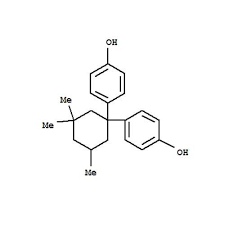
Bisphenol TMC
Price 100 INR
Minimum Order Quantity : 1 , , Kilograms
Melting Point : 158 C
Molecular Weight : 228.29 Grams (g)
Usage : BPA stands for bisphenol A. BPA is an industrial chemical that has been used to make certain plastics and resins since the 1960s. BPA is found in polycarbonate plastics and epoxy resins. Polycarbonate plastics are often used in containers that store food and beverages, such as water bottles.
Molecular Formula : C15H16O2
Antibiotics - IR Identification PT
Price 100 INR
Minimum Order Quantity : 1 Kilograms
Melting Point : 12 °C (54 °F)
Molecular Weight : 334.4 Grams (g)
Usage : Antibiotics, also known as antibacterials, are medications that destroy or slow down the growth of bacteria. They include a range of powerful drugs and are used to treat diseases caused by bacteria. Antibiotics cannot treat viral infections, such as cold, flu, and most coughs.
Molecular Formula : C16H18N2O4S

 Send Inquiry
Our Products


Kesarkunj, Rm No. 9, Vasanji Lalji Road, Kandivali (W), Mumbai - 400067, Maharashtra, India

Mr Nilesh Shah
(Director)
Mobile :08071630254
 Send Inquiry
 Send SMS
 Call Me Free
Developed and Managed by Infocom Network Private Limited.
