
Call us now :08071630254
 Send Inquiry
 Send Inquiry
Chlorinated hydrocarbons on Tenax
MOQ : 1 Kilograms
Chlorinated hydrocarbons on Tenax Specification
- Solubility
- soluble in most organic solvents
- Usage
- Chlorinated hydrocarbons are widely used as solvents and raw materials for the synthesis of various useful products, such as cleaning agents, pesticides and poly vinyl chloride (PVC). These chlorinated hydrocarbons, however, cause serious environmental problems when they were released into the air or water media.
- Melting Point
- −45 °C (−49 °F; 228 K)
- Molecular Weight
- 96.6 Grams (g)
- Molecular Formula
- C4H13Cl
Chlorinated hydrocarbons on Tenax Trade Information
- Minimum Order Quantity
- 1 Kilograms
- Payment Terms
- Cash in Advance (CID), Cash Advance (CA)
- Supply Ability
- 500 Kilograms Per Month
- Delivery Time
- 3-4 Week
- Sample Available
- Yes
- Sample Policy
- Sample costs shipping and taxes has to be paid by the buyer
- Main Export Market(s)
- Western Europe, Australia, Eastern Europe, Central America, Middle East, South America, Asia, North America, Africa
- Main Domestic Market
- All India
About Chlorinated hydrocarbons on Tenax
Chlorinated hydrocarbons absorbed on Tenax feature a molecular formula of C4H13Cl and a molecular weight of 96.6 grams. These compounds are notable for their low melting point of -45 C (-49 F; 228 K), ensuring stability under a wide range of temperatures. Soluble in most organic solvents, they offer versatile application across industries. Their primary usage includes serving as solvents and raw materials for manufacturing cleaning agents, pesticides, and polyvinyl chloride (PVC). While instrumental in industrial processes, chlorinated hydrocarbons require careful handling due to their potential environmental impact upon release into air or water. As a supplier and trader, we ensure quality and consistency in delivering this crucial chemical compound to meet diverse B2B requirements.
FAQs of Chlorinated hydrocarbons on Tenax:
Q: What are the primary applications of chlorinated hydrocarbons on Tenax?
A: They are widely used as solvents and raw materials for producing cleaning agents, pesticides, and PVC.Q: What is the melting point of chlorinated hydrocarbons on Tenax?
A: The melting point is -45 C (-49 F; 228 K).Q: Are chlorinated hydrocarbons soluble in organic solvents?
A: Yes, they are soluble in most organic solvents.Q: What is the molecular formula of chlorinated hydrocarbons?
A: The molecular formula is C4H13Cl.Q: Do chlorinated hydrocarbons pose environmental concerns?
A: Yes, they can cause serious environmental issues if released into air or water. Proper handling and containment are essential.
Tell us about your requirement

Price:
Quantity
Select Unit
- 50
- 100
- 200
- 250
- 500
- 1000+
Additional detail
Mobile number
Email

More Products in Analytical Grade Chemicals Category
Chromium XRF Standard - 13.68 wt%
Molecular Formula : Cr
Usage : Refer to material characterization and calibration for laboratory or industrial purposes
Appearance : Metallic powder or solid gray in color
Purity : 99.99% (excluding the calibration for wt% matrix)
Anions in Soil
Molecular Formula : Varies by anion type (e.g. NO3 SO4 Cl)
Usage : Used to identify nutrient availability and soil health for crops
Appearance : Typically analyzed as a clear or slightly cloudy solution when extracted
Purity : Depends on the composition of soil extract and test preparation
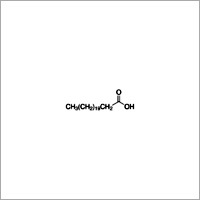
Behenic acid
Price 100 INR
Minimum Order Quantity : 1 Kilograms
Molecular Formula : C22H44O2
Usage : Commercially, behenic acid is often used to give hair conditioners and moisturizers their smoothing properties. It is also used in lubricating oils, and as a solvent evaporation retarder in paint removers. Its amide is used as an antifoaming agent in detergents, floor polishes and dripless candles.
Appearance : White to yellowish crystals or powder
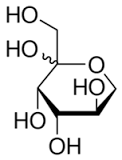
D-()-Tagatose
Price 100 INR
Minimum Order Quantity : 1 , , Kilograms
Molecular Formula : C6H12O6
Usage : Tagatose is used in chewing gum, dairy products, diet soft drinks, frostings, frozen yogurt, hard and soft confectioneries, health bars, nonfat ice cream and readytoeat cereals. Due to its bulk, tagatose can be used in small amounts in baking and products that are subjected to high temperatures.
Appearance : White solid
Purity : 95%

 Send Inquiry
Our Products


Kesarkunj, Rm No. 9, Vasanji Lalji Road, Kandivali (W), Mumbai - 400067, Maharashtra, India

Mr Nilesh Shah
(Director)
Mobile :08071630254
 Send Inquiry
 Send SMS
 Call Me Free
Developed and Managed by Infocom Network Private Limited.
