
Call us now :08071630254
 Send Inquiry
 Send Inquiry
Citral
MOQ : 1 , , Kilograms
Citral Specification
- Molecular Formula
- C10H16O
- Density
- 893 Kilogram per cubic meter (kg/m3)
- Molecular Weight
- 152.24 Grams (g)
- Usage
- Citral is also used as a flavor and for fortifying lemon oil. It also has strong antimicrobial qualities, and pheromonal effects in insects. Citral is used in the synthesis of vitamin A, lycopene, ionone, and methylionone, to mask the smell of smoke.
- Appearance
- Pale yellow liquid
Citral Trade Information
- Minimum Order Quantity
- 1 , , Kilograms
- Payment Terms
- Cash in Advance (CID), Cash Advance (CA)
- Supply Ability
- 500 Kilograms Per Month
- Delivery Time
- 3-4 Week
- Sample Available
- Yes
- Sample Policy
- Sample costs shipping and taxes has to be paid by the buyer
- Main Export Market(s)
- Australia, Central America, Middle East, South America, Western Europe, Asia, Eastern Europe, North America, Africa
- Main Domestic Market
- All India
About Citral
Citral Synonym: 3,7-Dimethyl-2,6-octadienal, Geranial and neral mixture CAS Number 5392-40-5 Linear Formula (CH3)2C=CHCH2CH2C(CH3)=CHCHO Molecular Weight 152.23 grade analytical standard vapor density 5 (vs air) vapor pressure 0.2 mmHg ( 200 C) assay 95.0% (cis + trans, GC) form neat shelf life limited shelf life, expiry date on the label refractive index n20/D 1.487-1.489 n20/D 1.488(lit.) bp 229C(lit.) density 0.888g/mLat 25C(lit.) suitability conforms to structure for Proton NMR spectrum format neat storage temp. 2-8CFAQs of Citral:
Q: What is the molecular formula and molecular weight of Citral?
A: The molecular formula of Citral is C10H16O, and its molecular weight is 152.24 grams (g).Q: What is the appearance of Citral?
A: Citral appears as a pale yellow liquid.Q: What is the density of Citral?
A: The density of Citral is 893 kilograms per cubic meter (kg/m3).Q: What are the main applications of Citral?
A: Citral is used as a flavor and for fortifying lemon oil. It is also employed in the synthesis of vitamin A, lycopene, ionone, and methylionone. Additionally, it masks the smell of smoke and has strong antimicrobial qualities and pheromonal effects in insects.Q: Does Citral possess antimicrobial properties?
A: Yes, Citral has strong antimicrobial qualities.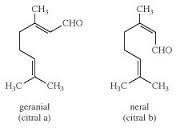
Tell us about your requirement

Price:
Quantity
Select Unit
- 50
- 100
- 200
- 250
- 500
- 1000+
Additional detail
Mobile number
Email

More Products in Analytical Grade Chemicals Category

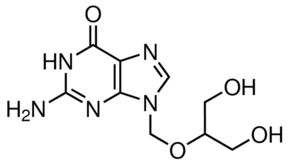
-HCH solution
Appearance : Clear to yellowish liquid
Molecular Weight : 290.83 g/mol
Molecular Formula : C6H6Cl6
Purity : Typically 99% for analytical purposes
Gas oil (CFPP, CP)
Appearance : Light to dark amber liquid
Molecular Weight : Varies
Molecular Formula : Varies (complex mixture of hydrocarbons)
Purity : Depends on processing; typically 8595%
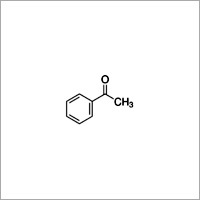
Acetophenone solution
Price 100 INR
Minimum Order Quantity : 1 Kilograms
Appearance : Colorless liquid
Molecular Weight : 120.151 Grams (g)
Molecular Formula : C6H5C(O)CH3
Purity : 99.0%
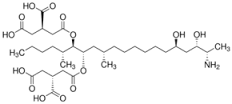
Fumonisin B2-13C34 solution
Price 100 INR
Minimum Order Quantity : 1 , , Kilograms
Appearance : White to offwhite powder
Molecular Weight : 721.83 Grams (g)
Molecular Formula : C34H59NO15
Purity : 98%

 Send Inquiry
Our Products


Kesarkunj, Rm No. 9, Vasanji Lalji Road, Kandivali (W), Mumbai - 400067, Maharashtra, India

Mr Nilesh Shah
(Director)
Mobile :08071630254
 Send Inquiry
 Send SMS
 Call Me Free
Developed and Managed by Infocom Network Private Limited.
