
Call us now :08071630254
 Send Inquiry
 Send Inquiry
Density Standard 1623 kg/m3
Density Standard 1623 kg/m3 Specification
- Density
- 1623 Gram per cubic centimeter(g/cm3)
- Shelf Life
- Indefinite under proper storage conditions
- Properties
- Provides accurate density reference for calibration
- Ph Level
- Neutral (7.0)
- HS Code
- 38220010
- Storage
- Store in a cool dry and well-ventilated place
- Shape
- Standardized shapes or containers
- Application
- Used for calibrating instruments and experiments requiring precise density standards
- Appearance
- Transparent or opaque depending on physical form
- Usage
- Primarily utilized in laboratories and industrial applications as a reference standard
- Ingredients
- Composed of precise reference materials or fluids
- Solubility
- Insoluble
- Smell
- Odorless
- Grade
- Calibration Grade
- Physical Form
- Solid or liquid depending on standard type
- Poisonous
- NO
About Density Standard 1623 kg/m3
Density Standard 1623 kg/m3Synonym: PCE, Perchloroethylene, Tetrachloroethylene CAS Number 127-18-4 Linear Formula CCl2=CCl2 Molecular Weight 165.83 vapor density 5.83 (vs air) vapor pressure 13 mmHg ( 20 C) 19 mmHg ( 25 C) CofA the exact density values can be taken from the certificate of analysis shelf life limited shelf life, expiry date on the label mfr. no. H&D Fitzgerald Ltd. refractive index n20/D 1.505(lit.) bp 121C(lit.) mp 22C(lit.) density 1.623g/mLat 25C(lit.) format mixtureFAQs of Density Standard 1623 kg/m3:
Q: What is the primary application of Density Standard 1623 kg/m3?
A: Density Standard 1623 kg/m3 is primarily utilized in laboratories and industrial applications as a reference standard for calibrating instruments and conducting experiments requiring precise density measurements.Q: What are the storage requirements for Density Standard 1623 kg/m3?
A: Density Standard 1623 kg/m3 should be stored in a cool, dry, and well-ventilated place to maintain its properties.Q: What physical forms does Density Standard 1623 kg/m3 come in?
A: Density Standard 1623 kg/m3 is available in solid or liquid form, depending on the standard type.Q: Is Density Standard 1623 kg/m3 poisonous?
A: No, Density Standard 1623 kg/m3 is not poisonous.Q: What is the shelf life of Density Standard 1623 kg/m3?
A: Density Standard 1623 kg/m3 has an indefinite shelf life under proper storage conditions.Q: What is the solubility of Density Standard 1623 kg/m3?
A: Density Standard 1623 kg/m3 is insoluble.Q: What grade is Density Standard 1623 kg/m3 classified under?
A: Density Standard 1623 kg/m3 is classified as Calibration Grade.
Tell us about your requirement

Price:
Quantity
Select Unit
- 50
- 100
- 200
- 250
- 500
- 1000+
Additional detail
Mobile number
Email

More Products in Analytical Grade Chemicals Category
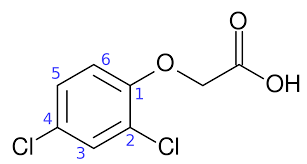
Herbicides II
Molecular Formula : C8H6Cl2O3
Appearance : White crystalline powder
Purity : 98%
Molecular Weight : 221.03 g/mol
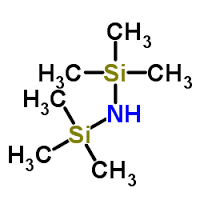
Hexamethyldisilazane
Price 100 INR
Minimum Order Quantity : 1 Kilograms
Molecular Formula : HN[Si(CH3)3]2
Appearance : Colorless liquid
Purity : 99.00 %
Molecular Weight : 161.395 Grams (g)
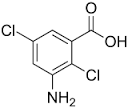
Chloramben
Price 100 INR
Minimum Order Quantity : 1 , , Kilograms
Molecular Formula : C7H5Cl2NO2
Appearance : Colorless crystalline solid
Purity : 95%
Molecular Weight : 206.02 Grams (g)
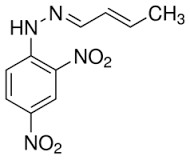
Crotonaldehyde-DNPH solution
Price 100 INR
Minimum Order Quantity : 1 Kilograms
Molecular Formula : C4H6O
Appearance : clear colorless
Purity : 99%
Molecular Weight : 70.09 Grams (g)

 Send Inquiry
Our Products


Kesarkunj, Rm No. 9, Vasanji Lalji Road, Kandivali (W), Mumbai - 400067, Maharashtra, India

Mr Nilesh Shah
(Director)
Mobile :08071630254
 Send Inquiry
 Send SMS
Developed and Managed by Infocom Network Private Limited.
