
Call us now :08071630254
 Send Inquiry
 Send Inquiry
Dextran from Leuconostoc mesenteroides
Dextran from Leuconostoc mesenteroides Specification
- Taste
- Neutral
- Shape
- Amorphous
- Structural Formula
- Polysaccharide consisting of -D-glucose units linked primarily by -(16) bonds
- Molecular Formula
- (C6H10O5)n
- CAS No
- 9004-54-0
- Smell
- Odorless
- Poisonous
- NO
- Physical Form
- Powder or granules
- Usage
- Employed as a volume expander in IV solutions stabilizer or thickening agent
- Appearance
- White to off-white powder
- Ph Level
- Neutral (varies depending on the preparation)
- HS Code
- 39139000
- Density
- Gram per cubic centimeter(g/cm3)
- Melting Point
- Not applicable (amorphous polymer)
- Properties
- Biocompatible high molecular weight polymer with water-solubility and viscosity-modifying properties
- Purity
- Typically 95%
- Ingredients
- Dextran polymer
- Grade
- Pharmaceutical/food/industrial grade
- Application
- Used in pharmaceuticals cosmetics food production and medical devices
- EINECS No
- 232-677-5
- Solubility
- Soluble in water insoluble in organic solvents
- Molecular Weight
- Variable depending on molecular size
- Shelf Life
- Typically 2-3 years under proper storage conditions
- Storage
- Store in a cool dry place in tightly sealed containers
About Dextran from Leuconostoc mesenteroides
Dextran from Leuconostoc mesenteroidesCAS Number 9004-54-0form neat CofA exact values can be taken from the accompanying certificate of analysis mol wt Mn ~1,000 Mp ~1,100 Mw ~1,300 application(s) gel permeation chromatography (GPC): suitable Mw/Mn ~1.30 format neatFAQs of Dextran from Leuconostoc mesenteroides:
Q: What is the application of Dextran from Leuconostoc mesenteroides?
A: Dextran is used in pharmaceuticals, cosmetics, food production, and medical devices. It is employed as a volume expander in IV solutions, stabilizer, or thickening agent.Q: What is the physical form and appearance of Dextran?
A: Dextran is provided in powder or granules form and has a white to off-white appearance.Q: What are the storage requirements for Dextran?
A: Dextran should be stored in a cool, dry place in tightly sealed containers to maintain its quality and extend its shelf life.Q: Is Dextran soluble in water?
A: Yes, Dextran is soluble in water but insoluble in organic solvents.Q: What is the shelf life of Dextran under proper storage conditions?
A: Dextran typically has a shelf life of 2-3 years when stored appropriately.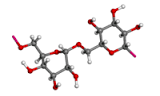
Tell us about your requirement

Price:
Quantity
Select Unit
- 50
- 100
- 200
- 250
- 500
- 1000+
Additional detail
Mobile number
Email

More Products in Analytical Grade Chemicals Category
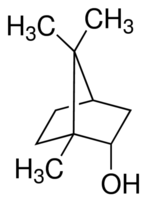
(+)-Borneol
Price 100 INR
Minimum Order Quantity : 1 Kilograms
Molecular Formula : C10H18O
Molecular Weight : 154.25 Grams (g)
Appearance : Colorless to white lumps
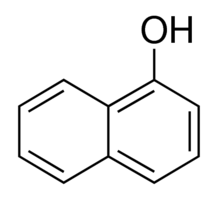
1-Naphthol
Price 100 INR
Minimum Order Quantity : 1 Kilograms
Molecular Formula : C10H8O
Molecular Weight : 144.17 Grams (g)
Purity : 99%
Appearance : Colorless or white solid; commercial material is often strongly colored
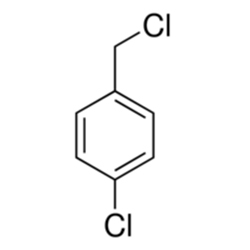
4-Chlorobenzyl chloride
Price 100 INR
Minimum Order Quantity : 1 Kilograms
Molecular Formula : C7H6Cl2
Molecular Weight : 161.03 Grams (g)
Purity : 99%
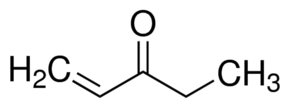
1- Penten-3-one
Price 100 INR
Minimum Order Quantity : 1 Kilograms
Molecular Formula : C5H8O
Molecular Weight : 84.12 Grams (g)
Purity : 98%
Appearance : Colorless clear liquid

 Send Inquiry
Our Products


Kesarkunj, Rm No. 9, Vasanji Lalji Road, Kandivali (W), Mumbai - 400067, Maharashtra, India

Mr Nilesh Shah
(Director)
Mobile :08071630254
 Send Inquiry
 Send SMS
Developed and Managed by Infocom Network Private Limited.
