
Call us now :08071630254
 Send Inquiry
 Send Inquiry
Diethyl ether
MOQ : 1 Kilograms
Diethyl ether Specification
- Molecular Formula
- (C2H5)2O
- Usage
- It is a colorless, highly volatile flammable liquid. It is commonly used as a solvent in laboratories and as a starting fluid for some engines. It was formerly used as a general anesthetic, until non-flammable drugs were developed, such as halothane. It has been used as a recreational drug to cause intoxication.
- Density
- 713 Kilogram per cubic meter (kg/m3)
- Molecular Weight
- 74.12 Grams (g)
- Melting Point
- -116.3 C
Diethyl ether Trade Information
- Minimum Order Quantity
- 1 Kilograms
- Payment Terms
- Cash in Advance (CID), Cash Advance (CA)
- Supply Ability
- 500 Kilograms KG Per Month
- Delivery Time
- 2-8 Week
- Sample Available
- Yes
- Sample Policy
- Sample costs shipping and taxes has to be paid by the buyer
- Packaging Details
- Carton and Poly Bag.
- Main Export Market(s)
- Western Europe, Central America, Eastern Europe, Africa, Middle East, South America, Australia, Asia, North America
- Main Domestic Market
- All India
About Diethyl ether
Diethyl ether Synonym: Ether, Ethyl ether CAS Number 60-29-7 Linear Formula (CH3CH2)2O Molecular Weight 74.12 grade analytical standard vapor density 2.6 (vs air) vapor pressure 2311 hPa ( 60 C) assay 99.9% (GC) form neat autoignition temp. 320F shelf life limited shelf life, expiry date on the label contains ~0.0005% 2,6-di-tert.-butyl-4-methylphenol as stabilizer expl. lim. 36.5% application(s) HPLC: suitable gas chromatography (GC): suitable color colorless refractive index n20/D 1.3530(lit.) n20/D 1.353 bp 34.6C(lit.) mp 116C(lit.) density 0.706g/mLat 25C(lit.) format neatFAQs of Diethyl ether:
Q: What is the density of Diethyl ether?
A: The density of Diethyl ether is 713 Kilogram per cubic meter (kg/m).Q: What are the main uses of Diethyl ether?
A: Diethyl ether is commonly used as a solvent in laboratories, as a starting fluid for some engines, and historically as a general anesthetic until safer alternatives were developed. It has also been used recreationally to cause intoxication.Q: What is the molecular weight of Diethyl ether?
A: The molecular weight of Diethyl ether is 74.12 grams (g).Q: What is the molecular formula of Diethyl ether?
A: The molecular formula of Diethyl ether is (CH)O.Q: What is the melting point of Diethyl ether?
A: The melting point of Diethyl ether is -116.3 C.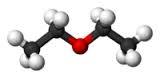
Tell us about your requirement

Price:
Quantity
Select Unit
- 50
- 100
- 200
- 250
- 500
- 1000+
Additional detail
Mobile number
Email

More Products in Analytical Grade Chemicals Category
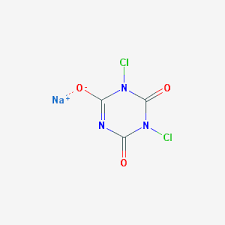
EPA TCL Hazardous Substances Mix 2
Molecular Weight : Varies depending on individual substance
Molecular Formula : Varies (mix of multiple substances)
Usage : Used for calibrating and validating methods for the testing of hazardous substances in environmental samples
Melting Point : Not Applicable for the mixture
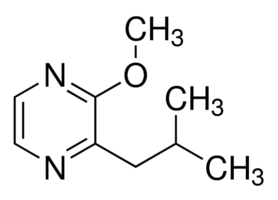
2- Isobutyl-3-methoxypyrazine
Price 100 INR
Minimum Order Quantity : 1 Kilograms
Molecular Weight : 166.22 Grams (g)
Molecular Formula : C9H14N2O
Usage : Since 3isobutyl2methoxypyrazine has such a powerful scent, it is often used in fragrances and cleaners. Being biologically produced, it poses little threat to children or pets, making its use in detergents, candles, deodorants, gums and candies quite widespread.
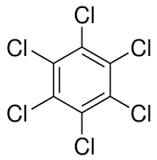
Hexachlorobenzene solution
Price 100 INR
Minimum Order Quantity : 1 Kilograms
Molecular Weight : 284.766 g/mol
Molecular Formula : C6Cl6
Usage : pesticide until 1965. Chronic (longterm) oral exposure to hexachlorobenzene in humans results in a liver disease
Melting Point : 231C

Acetylcysteine impurity D
Price 100 INR
Minimum Order Quantity : 1 , , Kilograms
Molecular Weight : 163.1951 Grams (g)
Molecular Formula : C5H9NO3S
Usage : When inhaled by mouth, acetylcysteine is used to help thin and loosen mucus in the airways due to certain lung diseases (such as emphysema, bronchitis, cystic fibrosis, pneumonia). This effect helps you to clear the mucus from your lungs so that you can breathe easier.
Melting Point : 109 to 110 C (228 to 230 F)

 Send Inquiry
Our Products


Kesarkunj, Rm No. 9, Vasanji Lalji Road, Kandivali (W), Mumbai - 400067, Maharashtra, India

Mr Nilesh Shah
(Director)
Mobile :08071630254
 Send Inquiry
 Send SMS
 Call Me Free
Developed and Managed by Infocom Network Private Limited.
