
Call us now :07971189995
 Send Inquiry

 Send Inquiry
Electrolytic iron
MOQ : 1 Kilograms
Electrolytic iron Specification
- Molecular Weight
- 55.845 Grams (g)
- Melting Point
- 536oC / 2796.8oF
- Molecular Formula
- Fe
- Physical Form
- Powder
- Application
- food
- Purity
- 98%
Electrolytic iron Trade Information
- Minimum Order Quantity
- 1 Kilograms
- Payment Terms
- Cash in Advance (CID), Cash Advance (CA)
- Supply Ability
- 500 Kilograms KG Per Month
- Delivery Time
- 2-8 Week
- Sample Available
- Yes
- Sample Policy
- Sample costs shipping and taxes has to be paid by the buyer
- Packaging Details
- Carton and Poly Bag.
- Main Export Market(s)
- Western Europe, Central America, Africa, Middle East, South America, Australia, Asia, Eastern Europe, North America
- Main Domestic Market
- All India
About Electrolytic iron
Electrolytic Iron Powder is a high-purity iron product designed for food applications requiring stringent quality standards. With an impressive 98% purity level, this powder-form iron features the molecular formula Fe and a molecular weight of 55.845 grams (g). Its finely powdered texture ensures ease of incorporation into formulations. Electrolytic Iron boasts a melting point of 536C (2796.8F), making it suitable for processes demanding high-temperature stability. Whether you are in the food processing or dietary supplement sectors, this product offers the reliability and quality necessary to meet industry demands, backed by its exceptional purity and performance characteristics.
FAQs of Electrolytic iron:
Q: What is the purity level of Electrolytic Iron?
A: Electrolytic Iron has a purity level of 98%, ensuring superior quality.Q: In which physical form is this product available?
A: Electrolytic Iron is offered in a powdered form for convenient use.Q: What is the melting point of Electrolytic Iron?
A: The melting point of Electrolytic Iron is 536C (2796.8F).Q: What is the molecular weight of Electrolytic Iron?
A: The molecular weight of Electrolytic Iron is 55.845 grams (g).Q: Is this product suitable for use in food applications?
A: Yes, Electrolytic Iron is specifically designed for food applications.
Tell us about your requirement

Price:
Quantity
Select Unit
- 50
- 100
- 200
- 250
- 500
- 1000+
Additional detail
Mobile number
Email

More Products in Analytical Grade Chemicals Category

Density Standard (20 C)
Molecular Formula : H2O
Molecular Weight : 18.015 g/mol
Usage : Instrument calibration in laboratories industrial quality assurance processes
Melting Point : 0 C (32 F) under standard atmospheric pressure

-Alanine
Price 100 INR
Minimum Order Quantity : 1 Kilograms
Molecular Formula : C3H7NO2
Molecular Weight : 89.09 Grams (g)
Usage : Most amino acids are the building blocks of proteins. However, some like betaalanine are used to make other chemicals in the body. Betaalanine is commonly used by mouth for improving athletic performance and exercise capacity, building lean muscle mass, and improving physical functioning in the elderly.
Melting Point : 258 °C (496 °F; 531 K)

Baclofen solution
Price 100 INR
Minimum Order Quantity : 1 Kilograms
Molecular Formula : C10H12ClNO2
Molecular Weight : 213.661 Grams (g)
Usage : Baclofen is used to treat muscle spasms caused by certain conditions (such as multiple sclerosis, cerebral palsy, spinal cord injury/disease). It works by helping to relax the muscles. Baclofen injection is used by patients who do not respond to or who cannot tolerate the side effects of baclofen taken by mouth.
Melting Point : 206208 °C
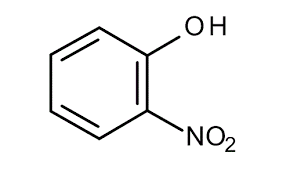
2-Nitrophenol Solution
Price 100 INR
Minimum Order Quantity : 1 Kilograms
Molecular Formula : C6H5NO3
Molecular Weight : 139.11 Grams (g)
Usage : 2Nitrophenol is used mainly as an intermediate for the production of dyestuffs, pigments, rubber chemicals, and fungicides. Small amounts are used as an acidbase indicator and as a reagent for glucose (EPA 1985; HSDB 1989).
Melting Point : (45 C)

 Send Inquiry
Our Products


Kesarkunj, Rm No. 9, Vasanji Lalji Road, Kandivali (W), Mumbai - 400067, Maharashtra, India

Mr Nilesh Shah
(Director)
Mobile :07971189995
 Send Inquiry
 Send SMS

Developed and Managed by Infocom Network Private Limited.
