
Call us now :08071630254
 Send Inquiry
 Send Inquiry
Erbium Standard for AAS
MOQ : 1 Kilograms
Erbium Standard for AAS Specification
- Usage
- Erbium isotopes are good neutron absorbers and are used in nuclear reactor control rods. The oxide erbia is used as a pink coloring agent in glazes and glasses. Erbium is used in alloys especially with vanadium to decrease the hardness of metals. It is also used in amplifiers and lasers.
- Appearance
- Silvery white
- Molecular Weight
- 167.26 Grams (g)
- Melting Point
- 1,529 C
- Molecular Formula
- Er
Erbium Standard for AAS Trade Information
- Minimum Order Quantity
- 1 Kilograms
- Payment Terms
- Cash in Advance (CID), Cash Advance (CA)
- Supply Ability
- 500 Kilograms KG Per Month
- Delivery Time
- 2-8 Week
- Sample Available
- Yes
- Sample Policy
- Sample costs shipping and taxes has to be paid by the buyer
- Packaging Details
- Carton and Poly Bag.
- Main Export Market(s)
- Eastern Europe, Central America, Africa, Middle East, South America, Western Europe, Asia, North America, Australia
- Main Domestic Market
- All India
About Erbium Standard for AAS
Erbium Standard for AAS is a high-quality material characterized by its silvery-white appearance and molecular formula Er. With a molecular weight of 167.26 g, this versatile element provides exceptional functionality in various industrial applications. Erbium isotopes serve as effective neutron absorbers, making them vital for nuclear reactor control rods. The oxide form, erbia, imparts a pink hue to glazes and glasses, making it a preferred coloring agent. Erbium alloys with vanadium significantly reduce the hardness of metals, enhancing their usability in specialized contexts. Furthermore, this element finds prominent use in amplifiers and lasers due to its unique properties. With a melting point of 1,529 C, Erbium Standard for AAS ensures optimal stability and performance in demanding environments, making it a reliable choice for traders and suppliers catering to industrial applications.
FAQs of Erbium Standard for AAS:
Q: What is the primary application of erbium isotopes?
A: Erbium isotopes are excellent neutron absorbers, commonly used in nuclear reactor control rods.Q: What makes erbia a valuable material?
A: Erbia is used as a pink coloring agent in glazes and glasses, valued for its aesthetic properties.Q: How does erbium impact metal alloys?
A: Erbium alloys with vanadium to decrease the hardness of metals, improving material characteristics.Q: What industrial uses make erbium significant?
A: Erbium is used in amplifiers and lasers due to its unique optical and electronic properties.Q: What is the melting point of erbium?
A: Erbium has a melting point of 1,529 C, ensuring its stability in high-temperature applications.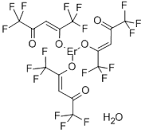
Tell us about your requirement

Price:
Quantity
Select Unit
- 50
- 100
- 200
- 250
- 500
- 1000+
Additional detail
Mobile number
Email

More Products in Analytical Grade Chemicals Category

-HCH
Purity : Typically >98%
Usage : Primarily used for agricultural pest control
Molecular Formula : C6H6Cl6
Molecular Weight : 290.83 g/mol
Hymecromone impurity B
Price 100 INR
Minimum Order Quantity : 1 Kilograms
Purity : 98%
Usage : Hymecromone (4methylumbelliferone) is a drug used in bile therapy. It is used as choleretic and antispasmodic drugs and as a standard for the fluorometric determination of enzyme activity.
Molecular Formula : C10H8O3
Molecular Weight : 176.17 Grams (g)

Valeraldehyde-2, 4-DNPH
Price 100 INR
Minimum Order Quantity : 1 , , Kilograms
Purity : 95%
Molecular Formula : C5H10O
Clarithromycin for peak identification
Price 100 INR
Minimum Order Quantity : 1 , , Kilograms
Purity : 99%
Usage : Clarithromycin is a macrolide antibiotic that fights bacteria in your body. Clarithromycin is used to treat many different types of bacterial infections affecting the skin and respiratory system. Clarithromycin is also used together with other medicines to treat stomach ulcers caused by Helicobacter pylori.
Molecular Formula : C38H69NO13
Molecular Weight : 747.953 Grams (g)

 Send Inquiry
Our Products


Kesarkunj, Rm No. 9, Vasanji Lalji Road, Kandivali (W), Mumbai - 400067, Maharashtra, India

Mr Nilesh Shah
(Director)
Mobile :08071630254
 Send Inquiry
 Send SMS
Developed and Managed by Infocom Network Private Limited.
