
Call us now :08071630254
 Send Inquiry
 Send Inquiry
Ewes/Goats Curd (for adulteration with cows milk) 0 and 1 % cows milk
Ewes/Goats Curd (for adulteration with cows milk) 0 and 1 % cows milk Specification
- Purity
- >99% (as dairy curd, excluding minimal cows milk exposure)
- Taste
- Characteristic tangy, mild, typical of ewes/goats milk curd
- Molecular Formula
- N/A (Complex mixture)
- Product Type
- Ewes/Goats Curd (with 0% and 1% cows milk adulteration)
- Properties
- Contains lactic acid bacteria; sensitive to cows milk adulteration; rich in proteins and fats typical to ewe/goat milk.
- Ph Level
- 4.2 - 4.8
- Smell
- Pleasant, fresh, slightly acidic dairy odor
- Shape
- Amorphous, spoonable mass
- Ingredients
- Pasteurized ewes/goats milk, starter cultures, with 0% or 1% cows milk (for adulteration)
- Physical Form
- Semi-solid (Curd)
- Grade
- Food Grade
- Storage
- Keep refrigerated at 28C, do not freeze
- Application
- Laboratory use for detection of adulteration, food authenticity studies
- Solubility
- Dispersible in water; insoluble in non-polar solvents
- Density
- 1.04 Gram per cubic centimeter(g/cm3)
- Usage
- Reference standard or control for cows milk adulteration detection tests
- HS Code
- 04061020
- Shelf Life
- 14-21 days under refrigerated conditions
- Appearance
- White to off-white creamy curd
- Molecular Weight
- N/A (Complex mixture)
- Structural Formula
- N/A (Complex mixture)
- Poisonous
- NO
- Melting Point
- Not applicable (semi-solid at room temperature)
- Microbial Quality
- Compliant with standards for food safety; absence of pathogens
- Intended Users
- Food analysts, research laboratories, regulatory agencies
- Fat Content
- 6-8% (typical for ewe/goat curd)
- Lactose Content
- 4-5% (typical for sheep/goat curd)
- Packaging
- Sterile, sealed containers (plastic or glass jars)
- Allergen Information
- Contains milk (ewe/goat, may contain up to 1% cow milk)
- pH Stability
- Stable under refrigeration, sensitive to heat exposure
- Protein Content
- 4-5.5% (typical for ewe/goat curd)
- Preservatives
- None (fresh curd preparation)
- Sample Size
- Customizable (from 100 g to 1 kg packs)
- Color Stability
- Stable under recommended storage
About Ewes/Goats Curd (for adulteration with cows milk) 0 and 1 % cows milk
Ewes/Goats Curd (for adulteration with cows milk) 0 and 1 % cows milk
Properties
| Related Categories | Additional Standards, Analytical Standards,Analytical/Chromatography, Animal Origin, Application CRMs, |
| format | matrix material |
| storage temp. | 20C |
Purpose-Built Dairy Reference for Laboratories
Specially designed for food analysts, research institutions, and regulatory agencies, this ewes/goats curd with trace cows milk is an essential reference standard for evaluating and calibrating cows milk adulteration detection methods. The sample is customizable in size and accurately represents authentic curd composition, ensuring reliability in food authenticity and safety assessments.
Microbial and Allergen Excellence
Every batch meets food safety compliance, free from harmful pathogens, and is produced from pasteurized milk under hygienic conditions. Allergen labelling is clear: the curd contains ewes/goats milk and may have up to 1% cow milk, assisting laboratories with precise detection and clear sample identification.
FAQs of Ewes/Goats Curd (for adulteration with cows milk) 0 and 1 % cows milk:
Q: How is this Ewes/Goats Curd used for detection of cows milk adulteration?
A: The curd is formulated with either 0% or 1% cows milk, serving as a reliable control or reference sample. Laboratories use it to validate analytical methods detecting adulteration, ensuring accuracy in food authenticity testing.Q: What quality standards does this curd meet regarding safety and composition?
A: Its compliant with established food safety standards, showing no pathogen presence. The product offers consistent fat (68%) and protein (45.5%) contents, representative of authentic ewe/goat curd, and contains no added preservatives.Q: When should I use this product in laboratory setups?
A: Use this reference curd when calibrating detection instruments, validating analytical methods, or running control samples during food authenticity or adulteration assessments involving cows milk in ewe/goat dairy products.Q: Where can the curd be stored and for how long does it remain stable?
A: Keep the curd refrigerated at 28C in its original, sealed packaging. Under these conditions, it maintains microbial and physical stability for 14 to 21 days. Avoid freezing or exposing to prolonged heat.Q: What benefits does this curd provide to food analysts and regulatory labs?
A: It enables precise and reproducible testing for cows milk adulteration, increases the reliability of method validation, helps maintain regulatory compliance, and ensures quality assurance in food authenticity research.Q: How is the curd packaged to maintain its quality and integrity?
A: The curd is packed in sterile, sealed containerseither plastic or glass jarsimmediately after preparation, minimizing contamination risk and preserving microbiological and physical properties.
Tell us about your requirement

Price:
Quantity
Select Unit
- 50
- 100
- 200
- 250
- 500
- 1000+
Additional detail
Mobile number
Email

More Products in Analytical Grade Chemicals Category
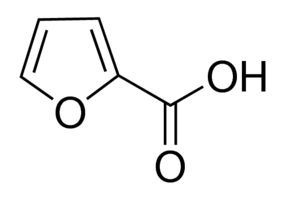
2-Furoic acid
Price 100 INR
Minimum Order Quantity : 1 Kilograms
Molecular Formula : C5H4O3
Molecular Weight : 112.0835 Grams (g)
Purity : 98%

Ponceau SX
Price 100 INR
Minimum Order Quantity : 1 Kilograms
Molecular Formula : Na2C18H14N2S2O7
Molecular Weight : 480.42 Grams (g)
Usage : Food Red 1, Ponceau SX, FD&C Red No. 4, or C.I. 14700 is a red azo dye once used as a food dye. As a food additive, it has the E number E125. It usually used as a disodium salt.
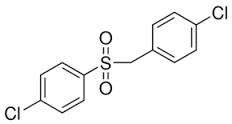
Chlorbenside Sulfone
Price 100 INR
Minimum Order Quantity : 1 Kilograms
Molecular Formula : C13H10Cl2S
Molecular Weight : 269.2 Grams (g)
Purity : 98%
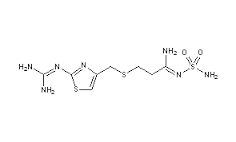
Famotidine
Price 100 INR
Minimum Order Quantity : 1 , , Kilograms
Molecular Formula : C8H15N7O2S3
Molecular Weight : 337.5 Grams (g)
Purity : 95%
Usage : What is famotidine? Famotidine is a histamine2 blocker that works by decreasing the amount of acid the stomach produces. Famotidine is used to treat and prevent ulcers in the stomach and intestines. It also treats conditions in which the stomach produces too much acid, such as ZollingerEllison syndrome.

 Send Inquiry
Our Products


Kesarkunj, Rm No. 9, Vasanji Lalji Road, Kandivali (W), Mumbai - 400067, Maharashtra, India

Mr Nilesh Shah
(Director)
Mobile :08071630254
 Send Inquiry
 Send SMS
Developed and Managed by Infocom Network Private Limited.
