
Call us now :08071630254
 Send Inquiry
 Send Inquiry
Hellma calibration standard, Didymium glass filter
Hellma calibration standard, Didymium glass filter Specification
- Refractive Rate
- 1.521.54 (approximate depends on specific glass composition)
- CAS No
- N/A (Didymium is a mixture not a single compound)
- Molecular Formula
- N/A (Didymium glass is a mixture of elements)
- Application
- Optical calibration spectroscopy and photometric standardization
- Appearance
- Transparent to violet-tinted glass
- Structural Formula
- N/A (Amorphous solid composition)
- Smell
- Odorless
- Ph Level
- Neutral (not soluble in water)
- Storage
- Store in a clean dry environment away from moisture and chemicals
- Shape
- Lens-like or flat filter shape
- Purity
- Not applicable (composed of mixed elements and materials)
- Poisonous
- NO
- Solubility
- Insoluble in water
- Physical Form
- Solid glass filter
- Molecular Weight
- N/A (Didymium is not a single compound)
- Grade
- Analytical grade for calibration standards
- Ingredients
- Rare earth elements (Neodymium Praseodymium) combined with silicon dioxide and other glass-forming materials
- Density
- 3 Gram per cubic centimeter(g/cm3)
- EINECS No
- N/A (Didymium is not a single substance)
- Usage
- Primarily used in instruments to calibrate wavelengths and absorbencies in optical systems
- Melting Point
- Dependant on glass composition typically above 1000 C
- Properties
- Stable durable and resistant to environmental factors
- HS Code
- 900190
- Shelf Life
- Indefinite under proper storage conditions
About Hellma calibration standard, Didymium glass filter
Hellmacalibration standard, Didymium glass filterF7, for testing the wavelength accuracy and the photometric accuracyPropertiesRelated CategoriesAdditional Standards,Analytical Standards,Analytical/Chromatography,Hellma,Hellma Calibration Standards,Labware,Manufacturer Browser,Spectroscopy,UV/Vis and Fluorescencemfr. no. Hellma (F7)PropertiesRelated CategoriesAdditional Standards,Analytical Standards,Analytical/Chromatography,Hellma,Hellma Calibration Standards,Labware,Manufacturer Browser,Spectroscopy,UV/Vis and Fluorescencemfr. no. Hellma (F7A)PropertiesRelated CategoriesAdditional Standards,Analytical Standards,Analytical/Chromatography,Hellma,Hellma Calibration Standards,Labware,Manufacturer Browser,Spectroscopy,UV/Vis and Fluorescencemfr. no. Hellma (F7W)FAQs of Hellma calibration standard, Didymium glass filter:
Q: What is the primary application of the Hellma Calibration Standard Didymium Glass Filter?
A: The primary application of the Hellma Calibration Standard Didymium Glass Filter is optical calibration spectroscopy and photometric standardization in optical systems.Q: What are the storage requirements for the Didymium Glass Filter?
A: The Didymium Glass Filter should be stored in a clean, dry environment away from moisture and chemicals to ensure its durability and performance.Q: What is the physical form and appearance of this filter?
A: The Hellma Calibration Standard Didymium Glass Filter is a solid glass filter with a transparent to violet-tinted appearance.Q: Is the Didymium Glass Filter poisonous or does it have any odor?
A: No, the Didymium Glass Filter is not poisonous and it is odorless.Q: What is the refractive index of the Didymium Glass Filter?
A: The refractive index of the Didymium Glass Filter is approximately 1.52 to 1.54, depending on the specific glass composition.Q: What is the shelf life of the Didymium Glass Filter?
A: The shelf life of the Didymium Glass Filter is indefinite under proper storage conditions.Q: What materials are used in the composition of the Didymium Glass Filter?
A: The composition includes rare earth elements like Neodymium and Praseodymium combined with silicon dioxide and other glass-forming materials.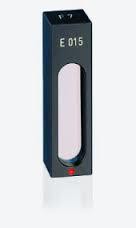
Tell us about your requirement

Price:
Quantity
Select Unit
- 50
- 100
- 200
- 250
- 500
- 1000+
Additional detail
Mobile number
Email

More Products in Analytical Grade Chemicals Category
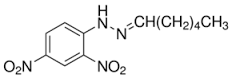
Hexaldehyde-DNPH
Price 100 INR
Minimum Order Quantity : 1 Kilograms
Molecular Weight : 100.16
Molecular Formula : C6H12O
Melting Point : 20 C (−4 F; 253 K)
Usage : Hexanal is used in fruit flavors and, when highly diluted, in perfumery for obtaining fruity notes. It is also used in organic synthesis of plasticizers, rubber chemicals, dyes, synthetic resins, insecticides.

Tropisetron impurity B
Price 100 INR
Minimum Order Quantity : 1 Kilograms
Molecular Weight : 284.35 Grams (g)
Molecular Formula : C17H21ClN2O2
Usage : Tropisetron. Tropisetron is a serotonin 5HT3 receptor antagonist used mainly as an antiemetic to treat nausea and vomiting following chemotherapy, although it has been used experimentally as an analgesic in cases of fibromyalgia. It was patented in 1982 and approved for medical use in 1992.

Valsartan
Price 100 INR
Minimum Order Quantity : 1 Kilograms
Molecular Weight : 435.5 Grams (g)
Molecular Formula : C24H29N5O3
Melting Point : 83 88C
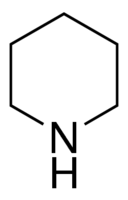
Piperidine
Price 100 INR
Minimum Order Quantity : 1 Kilograms
Molecular Weight : 85.15 Grams (g)
Molecular Formula : C5H11N
Melting Point : 7 C (19 F; 266 K)

 Send Inquiry
Our Products


Kesarkunj, Rm No. 9, Vasanji Lalji Road, Kandivali (W), Mumbai - 400067, Maharashtra, India

Mr Nilesh Shah
(Director)
Mobile :08071630254
 Send Inquiry
 Send SMS
 Call Me Free
Developed and Managed by Infocom Network Private Limited.
