
Call us now :08071630254
 Send Inquiry
 Send Inquiry
Hordenine
MOQ : 1 Kilograms
Hordenine Specification
- Appearance
- Colorless solid
- Melting Point
- 116 to 117 C (241 to 243 F; 389 to 390 K)
- Molecular Weight
- 165.23 Grams (g)
- Molecular Formula
- C10H15NO
- Usage
- Hordenine can be used to measure beer consumption, as hordenine levels in the blood increase significantly following consumption. Forensic toxicology reports can use hordenine as a suitable measure for beer consumption [5].
Hordenine Trade Information
- Minimum Order Quantity
- 1 Kilograms
- Payment Terms
- Cash in Advance (CID), Cash Advance (CA)
- Supply Ability
- 500 Kilograms KG Per Month
- Delivery Time
- 2-8 Week
- Sample Available
- Yes
- Sample Policy
- Sample costs shipping and taxes has to be paid by the buyer
- Packaging Details
- Carton and Poly Bag.
- Main Export Market(s)
- Western Europe, Eastern Europe, Middle East, Central America, Africa, South America, Australia, Asia, North America
- Main Domestic Market
- All India
About Hordenine
Hordenineanalytical standardSynonym: 2-(4-Hydroxyphenyl)-N,N-dimethylethylamine, 4-(2-Dimethylaminoethyl)phenol,N,N-Dimethyltyramine,p-Hydroxy-N,N-dimethylphenethylamine, Anhaline, Cactine, Eremursin, PeyocactineCAS Number539-15-1Empirical Formula (Hill Notation)C10H15NOMolecular Weight165.23PropertiesRelated CategoriesAcacia,Alkaloids / Nitrogen Containing Compounds,Alphabetical Index of Phytochemical Standards,Analytical Standards,Analytical/Chromatography,Cannabis,E - H,Phytochemical Standards,Phytochemical Standards by Plant Genusgrade analytical standardInChI Key KUBCEEMXQZUPDQ-UHFFFAOYSA-Nassay 97.5% (HPLC)form neatshelf life limited shelf life, expiry date on the labelapplication(s) HPLC: suitablegas chromatography (GC): suitableimpurities 3.0% water (calc. from elemental analysis)format neatFAQs of Hordenine:
Q: What is the molecular formula of Hordenine?
A: The molecular formula of Hordenine is C10H15NO.Q: What is the melting point of Hordenine?
A: The melting point of Hordenine is 116 to 117 C (241 to 243 F; 389 to 390 K).Q: What is the molecular weight of Hordenine?
A: The molecular weight of Hordenine is 165.23 Grams (g).Q: What is the appearance of Hordenine?
A: Hordenine appears as a colorless solid.Q: What is the primary usage of Hordenine?
A: Hordenine is used to measure beer consumption, as its levels in the blood increase significantly following beer consumption. It is also utilized in forensic toxicology reports as a suitable indicator for beer consumption.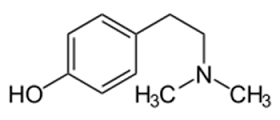
Tell us about your requirement

Price:
Quantity
Select Unit
- 50
- 100
- 200
- 250
- 500
- 1000+
Additional detail
Mobile number
Email

More Products in Analytical Grade Chemicals Category
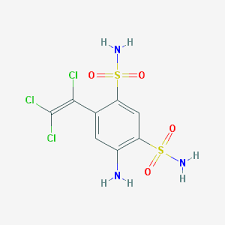
Clorsulon
Price 100 INR
Minimum Order Quantity : 1 Kilograms
Molecular Formula : C8H8Cl3N3O4S2
Molecular Weight : 380.6558 Grams (g)
Appearance : Pale yellow amorphous powder
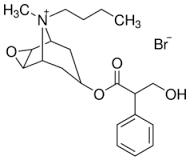
Hyoscine
Price 100 INR
Minimum Order Quantity : 1 Kilograms
Molecular Formula : C17H21NO4
Molecular Weight : 303.358 Grams (g)
Usage : it helps to ease bloating and the spasmtype pain that can be associated with irritable bowel syndrome and diverticular disease
Appearance : placebo Study drug
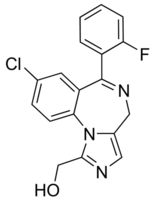
-Hydroxymidazolam solution
Price 100 INR
Minimum Order Quantity : 1 Kilograms
Molecular Formula : C18H13ClFN3O
Molecular Weight : 341.8 Grams (g)
Usage : The drug is used for treatment of acute seizures, moderate to severe insomnia, and for inducing sedation and amnesia before medical procedures. It possesses profoundly potent anxiolytic, amnestic, hypnotic, anticonvulsant, skeletal muscle relaxant, and sedative properties. .
Appearance : white to offwhite crystalline powder
Antioxidant Kit 2, Phenolics
Price 100 INR
Minimum Order Quantity : 1 , , Kilograms
Molecular Formula : C6H8O6
Usage : Antioxidants are compounds that inhibit oxidation. Oxidation is a chemical reaction that can produce free radicals, thereby leading to chain reactions that may damage the cells of organisms. ... Antioxidant dietary supplements have not been shown to improve health in humans, or to be effective at preventing disease.
Appearance : white crystals or powder

 Send Inquiry
Our Products


Kesarkunj, Rm No. 9, Vasanji Lalji Road, Kandivali (W), Mumbai - 400067, Maharashtra, India

Mr Nilesh Shah
(Director)
Mobile :08071630254
 Send Inquiry
 Send SMS
 Call Me Free
Developed and Managed by Infocom Network Private Limited.
