
Call us now :08071630254
 Send Inquiry
 Send Inquiry
Indole
MOQ : 1 Kilograms
Indole Specification
- Usage
- As an intercellular signal molecule, indole regulates various aspects of bacterial physiology, including spore formation, plasmid stability, resistance to drugs, biofilm formation, and virulence. A number of indole derivatives have important cellular functions, including neurotransmitters such as serotonin.
- Appearance
- White solid
- Molecular Weight
- 117.15 Grams (g)
- Molecular Formula
- C8H7N
- Melting Point
- 52 to 54 C (126 to 129 F; 325 to 327 K)
Indole Trade Information
- Minimum Order Quantity
- 1 Kilograms
- Payment Terms
- Cash in Advance (CID), Cash Advance (CA)
- Supply Ability
- 500 Kilograms, , KG Per Month
- Delivery Time
- 2-8 Week
- Sample Available
- Yes
- Sample Policy
- Sample costs shipping and taxes has to be paid by the buyer
- Packaging Details
- Carton and Poly Bag.
- Main Export Market(s)
- Western Europe, Eastern Europe, Central America, Africa, Middle East, South America, Australia, Asia, North America
- Main Domestic Market
- All India
About Indole
Indoleanalytical standardSynonym: 1H-Benzo[b]pyrroleCAS Number120-72-9Empirical Formula (Hill Notation)C8H7NMolecular Weight117.15PropertiesRelated CategoriesA-L,Additional Standards,All Alphabetically Sorted,Alpha Sort,Analytical Standards,Analytical/Chromatography,Chromatography,E-L,Environmental Standards,F-L,Flavor and Fragrance Standards,Flavors and Fragrance Standards,Food & Beverage Standards,Food Products & Beverages,Food and Cosmetic Component Standards,G-L,Herbs & Spices,Jasmin,Organic Pollutant Standards,Substance Classification,Volatile & Semivolatile Standards,Volatiles/ Semivolatiles,othergrade analytical standardInChI Key SIKJAQJRHWYJAI-UHFFFAOYSA-Nform neatpackaging ampule of 1000mgapplication(s) HPLC: suitablegas chromatography (GC): suitablebp 253-254C(lit.)mp 51-54C(lit.)format neatstorage temp. room tempFAQs of Indole:
Q: What are the primary uses of Indole?
A: Indole is used as an intercellular signal molecule to regulate various aspects of bacterial physiology, including spore formation, plasmid stability, resistance to drugs, biofilm formation, and virulence. Additionally, indole derivatives have significant cellular functions, such as serving as neurotransmitters like serotonin.Q: What is the appearance of Indole?
A: Indole appears as a white solid.Q: What is the melting point range of Indole?
A: The melting point of Indole ranges from 52 to 54 C (126 to 129 F; 325 to 327 K).Q: What is the molecular formula of Indole?
A: The molecular formula of Indole is C8H7N.Q: What is the molecular weight of Indole?
A: The molecular weight of Indole is 117.15 grams (g).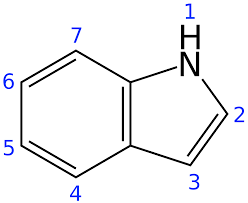
Tell us about your requirement

Price:
Quantity
Select Unit
- 50
- 100
- 200
- 250
- 500
- 1000+
Additional detail
Mobile number
Email

More Products in Analytical Grade Chemicals Category

Prilocaine Related Compound A
Price 100 INR
Minimum Order Quantity : 1 Kilograms
Molecular Formula : C27H42N4O2
Melting Point : 37 to 38 C (99 to 100 F)
Usage : This medication contains 2 amidetype local anesthetics, lidocaine and prilocaine. It is used on normal, unbroken skin or on the outer genital area to prevent pain before certain procedures such as inserting a needle, skin grafts, or skin laser surgery. It works by temporarily numbing the skin and surrounding area.
Molecular Weight : 454.6 Grams (g)
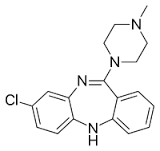
Clozapine
Price 100 INR
Minimum Order Quantity : 1 Kilograms
Molecular Formula : C18H19ClN4
Melting Point : 183 C (361 F)
Usage : Clozapine, sold under the brand name Clozaril among others, is an atypical antipsychotic medication. It is mainly used for schizophrenia that does not improve following the use of other antipsychotic medications. In those with schizophrenia and schizoaffective disorder it may decrease the rate of suicidal behavior.
Molecular Weight : 326.83 Grams (g)
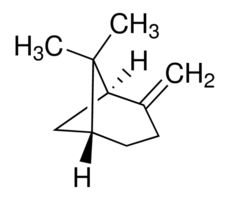
(+)--Pinene
Price 100 INR
Minimum Order Quantity : 1 Kilograms
Molecular Formula : C10H16
Melting Point : 211 to 218 K)
Usage : pinene is highly repellant to insects and is widely seen terpenoid in the nature. Pinene is found in many essential oils as a main component. It is used in production of many perfumes and deodorants. Alpha pinene is a compound of the oils and resins of numerous plants and is mostly seen in coniferous pine trees.
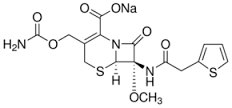
Cefoxitin sodium salt
Price 100 INR
Minimum Order Quantity : 1 Kilograms
Molecular Formula : C16H16N3NaO7S2
Melting Point : 160 C
Molecular Weight : 449.4 Grams (g)

 Send Inquiry
Our Products


Kesarkunj, Rm No. 9, Vasanji Lalji Road, Kandivali (W), Mumbai - 400067, Maharashtra, India

Mr Nilesh Shah
(Director)
Mobile :08071630254
 Send Inquiry
 Send SMS
 Call Me Free
Developed and Managed by Infocom Network Private Limited.
