
Call us now :08071630254
 Send Inquiry
 Send Inquiry
(+)--Pinene
MOQ : 1 Kilograms
(+)--Pinene Specification
- Appearance
- Liquid
- Molecular Formula
- C10H16
- Usage
- pinene is highly repellant to insects and is widely seen terpenoid in the nature. Pinene is found in many essential oils as a main component. It is used in production of many perfumes and deodorants. Alpha pinene is a compound of the oils and resins of numerous plants and is mostly seen in coniferous pine trees.
- Density
- 0,86 gcm−3
- Melting Point
- 211 to 218 K)
(+)--Pinene Trade Information
- Minimum Order Quantity
- 1 Kilograms
- Payment Terms
- Cash in Advance (CID), Cash Advance (CA)
- Supply Ability
- 500 Kilograms KG Per Month
- Delivery Time
- 2-8 Week
- Sample Available
- Yes
- Sample Policy
- Sample costs shipping and taxes has to be paid by the buyer
- Packaging Details
- Carton and Poly Bag.
- Main Export Market(s)
- Western Europe, Australia, Central America, Africa, Middle East, South America, Asia, Eastern Europe, North America
- Main Domestic Market
- All India
About (+)--Pinene
(+)--PineneAnalytical standard Synonym: (1R,5R)-2(10)-Pinene, (1R,5R)-6,6-Dimethyl-2-methylenebicyclo[3.1.1]heptane CAS Number 19902-08-0 Empirical Formula (Hill Notation) C10H16 Molecular Weight 136.23 grade analytical standard assay 98.5% (sum of enantiomers, GC) form neat optical activity []20/D +221, neat shelf life limited shelf life, expiry date on the label application(s) HPLC: suitable gas chromatography (GC): suitable refractive index n20/D 1.478(lit.) n20/D 1.478 bp 164-165C(lit.) density 0.872g/mLat 25C(lit.) format neat storage temp. 2-8CFAQs of (+)--Pinene:
Q: What is the molecular formula of (+)--Pinene?
A: The molecular formula of (+)--Pinene is C10H16.Q: What is the physical appearance of (+)--Pinene?
A: (+)--Pinene appears as a liquid.Q: What is the melting point range of (+)--Pinene?
A: The melting point ranges from 211 to 218 K for (+)--Pinene.Q: What is the density of (+)--Pinene?
A: The density of (+)--Pinene is 0.86 gcm.Q: What are the primary usages of (+)--Pinene?
A: (+)--Pinene is highly repellent to insects, widely found in nature as a terpenoid, and a major component of many essential oils. It is used in the production of perfumes and deodorants.Q: In which type of plants is (+)--Pinene commonly found?
A: (+)--Pinene is commonly found in the oils and resins of numerous plants, especially in coniferous pine trees.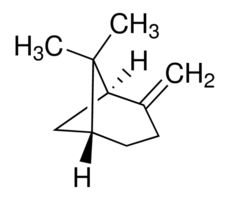
Tell us about your requirement

Price:
Quantity
Select Unit
- 50
- 100
- 200
- 250
- 500
- 1000+
Additional detail
Mobile number
Email

More Products in Analytical Grade Chemicals Category
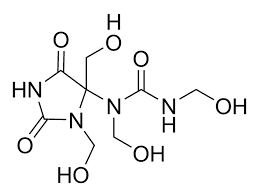
EPA TCLP Acids Mix
Molecular Formula : Varies (Mixture of acids)
Appearance : Clear to slightly yellow liquid
Molecular Weight : Varies
Purity : Varies based on component acids
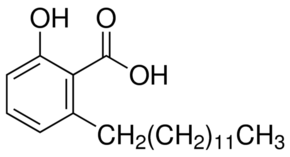
Ginkgolic acid C15:1
Price 100 INR / Kilograms
Minimum Order Quantity : 1 Kilograms
Molecular Formula : C22H34O3
Molecular Weight : 346.5 Grams (g)
Purity : 98%

Tyramine
Price 100 INR
Minimum Order Quantity : 1 Kilograms
Molecular Formula : C8H11NO
Appearance : pale yellow powder
Molecular Weight : 137.18

 Send Inquiry
Our Products


Kesarkunj, Rm No. 9, Vasanji Lalji Road, Kandivali (W), Mumbai - 400067, Maharashtra, India

Mr Nilesh Shah
(Director)
Mobile :08071630254
 Send Inquiry
 Send SMS
 Call Me Free
Developed and Managed by Infocom Network Private Limited.
