
Call us now :08071630254
 Send Inquiry
 Send Inquiry
(+)-Thalidomide
MOQ : 1 Kilograms
(+)-Thalidomide Specification
- Melting Point
- 273-276C
- Appearance
- White Solid
- Molecular Weight
- 258.23
- Molecular Formula
- C13H10N2O4
- Density
- 1.60.1 g/cm3
- Chemical Name
- (+)-Thalidomide
- Purity(%)
- 99%
(+)-Thalidomide Trade Information
- Minimum Order Quantity
- 1 Kilograms
- Payment Terms
- Cash in Advance (CID), Cash Advance (CA)
- Supply Ability
- 500 Kilograms KG Per Month
- Delivery Time
- 2-8 Week
- Sample Available
- Yes
- Sample Policy
- Sample costs shipping and taxes has to be paid by the buyer
- Packaging Details
- Carton and Poly Bag.
- Main Export Market(s)
- Western Europe, Central America, Africa, Middle East, South America, Australia, Asia, Eastern Europe, North America
- Main Domestic Market
- All India
About (+)-Thalidomide
(+)-Thalidomide Synonym: R-(+)-2-(2,6-Dioxo-3-piperidinyl)-1H-isoindole-1,3(2H)-dione Empirical Formula (Hill Notation): C13H10N2O4Molecular Weight: 258.23CAS Number: 2614-06-4 assay 98% (HPLC) form powder color white to beige solubility DMSO: soluble15mg/mL, clear originator Celgene storage temp. room temp Gene Information human ... LITAF(9516), TNF(7124)mouse ... Nos2(18126)rat ... Nos1(24598) Description Biochem/physiol Actions (-)-Thalidomide selectively inhibits biosynthesis of tumor necrosis factor (TNF-). (R)-Thalidomide is called "safe enantiomer", but it can be converted in the body to (S)-isomer. Preparation Note Thalidomide is soluble in DMSO at a concentration that is greater than or equal to 20 mg/ml. It is insoluble in ethanol and water. Application Thalidomide has been used to study its teratogenic effects in chicken embryos and human embryonic cells. This study reported that thalidomide causes limb defects by stabilizing PTEN, inhibiting the expression of Akt and activating caspase-dependent apoptosis[1]. Thalidomide has also been used for studying glutathione mediated teratogenic resistance in mouse embryos[2]. Features and Benefits This compound was developed by Celgene.FAQs of (+)-Thalidomide:
Q: What is the molecular formula of (+)-Thalidomide?
A: The molecular formula of (+)-Thalidomide is C13H10N2O4.Q: What is the purity percentage of (+)-Thalidomide?
A: The purity of (+)-Thalidomide is 99%.Q: What is the appearance of (+)-Thalidomide?
A: (+)-Thalidomide appears as a white solid.Q: What is the melting point of (+)-Thalidomide?
A: The melting point of (+)-Thalidomide is 273-276C.Q: What is the density of (+)-Thalidomide?
A: The density of (+)-Thalidomide is 1.60.1 g/cm.
Tell us about your requirement

Price:
Quantity
Select Unit
- 50
- 100
- 200
- 250
- 500
- 1000+
Additional detail
Mobile number
Email

More Products in Biochemical & Reagents Category
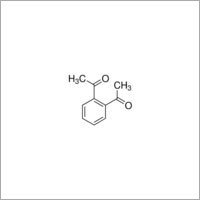
1,2- Diacetylbenzene
Price 100 INR / Kilograms
Minimum Order Quantity : 1 Kilograms
Molecular Formula : C10H10O2
Molecular Weight : 162.19 GSM (gm/2)
Purity(%) : 99.5%

1, 3-Dipropyl-8-(p-sulfophenyl)xanthine
Price 100 INR / Kilograms
Minimum Order Quantity : 1 Kilograms
Molecular Formula : C6H14S3
Molecular Weight : 182.4 Grams (g)
Melting Point : 122 Degree C
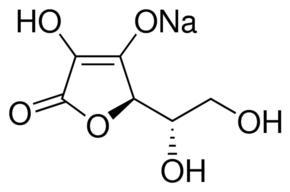
(+)-Sodium L-ascorbate
Price 100 INR
Minimum Order Quantity : 1 Kilograms
Molecular Formula : C6H7O6Na
Purity(%) : 99%
Melting Point : 220 C

(3,4-Dimethoxyphenyl)acetonitrile
Price 100 INR
Minimum Order Quantity : 1 Kilograms
Molecular Formula : C10H11NO2
Molecular Weight : 177.2
Melting Point : 6466C

 Send Inquiry
Our Products


Kesarkunj, Rm No. 9, Vasanji Lalji Road, Kandivali (W), Mumbai - 400067, Maharashtra, India

Mr Nilesh Shah
(Director)
Mobile :08071630254
 Send Inquiry
 Send SMS
Developed and Managed by Infocom Network Private Limited.
