
Call us now :08071630254
 Send Inquiry
 Send Inquiry
Cetyl palmitate 15
MOQ : 1 Kilograms
Cetyl palmitate 15 Specification
- Molecular Formula
- C32H64O2
- Appearance
- colourless wax
- Usage
- Add to oil phase of formulas, usual final concentration 2-15%. For external use only. Applications: Color cosmetics (e.g. lipsticks), hair care, lotions, creams, moisturizers, cleansers, deodorant sticks, sunscreens. Manufacture: Cetyl palmitate is produced by reacting cetyl alcohol with palmitic acid.
- Molecular Weight
- 480.8 Grams (g)
- Melting Point
- 54 C (129 F; 327 K)
Cetyl palmitate 15 Trade Information
- Minimum Order Quantity
- 1 Kilograms
- Payment Terms
- Cash in Advance (CID), Cash Advance (CA)
- Supply Ability
- 500 Kilograms KG Per Month
- Delivery Time
- 2-8 Week
- Sample Available
- Yes
- Sample Policy
- Sample costs shipping and taxes has to be paid by the buyer
- Packaging Details
- Carton and Poly Bag.
- Main Export Market(s)
- Western Europe, Australia, South America, Middle East, Central America, Asia, Eastern Europe, North America, Africa
- Main Domestic Market
- All India
About Cetyl palmitate 15
Cetyl palmitate 15 Synonym: Cetyl palmitate, Hexadecyl hexadecanoate, Palmitic acid palmityl ester, Palmityl palmitateLinear Formula: CH3(CH2)14CO2(CH2)15CH3Molecular Weight: 480.85CAS Number: 540-10-3form neat mp 55-56C(lit.) format neatFAQs of Cetyl palmitate 15:
Q: What is the molecular formula of Cetyl Palmitate 15?
A: The molecular formula of Cetyl Palmitate 15 is C32H64O2.Q: What is the melting point of Cetyl Palmitate 15?
A: The melting point of Cetyl Palmitate 15 is 54 C (129 F; 327 K).Q: How is Cetyl Palmitate 15 manufactured?
A: Cetyl Palmitate 15 is produced by reacting cetyl alcohol with palmitic acid.Q: What are the typical applications of Cetyl Palmitate 15?
A: Cetyl Palmitate 15 is commonly used in color cosmetics (e.g., lipsticks), hair care, lotions, creams, moisturizers, cleansers, deodorant sticks, and sunscreens.Q: What is the recommended usage concentration for Cetyl Palmitate 15?
A: The usual final concentration of Cetyl Palmitate 15 is 2-15%, and it is added to the oil phase of formulas.Q: What is the appearance of Cetyl Palmitate 15?
A: Cetyl Palmitate 15 appears as a colorless wax.Q: Is Cetyl Palmitate 15 suitable for internal use?
A: No, Cetyl Palmitate 15 is intended for external use only.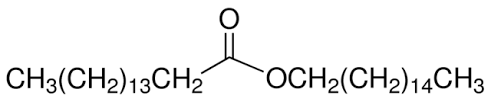
Tell us about your requirement

Price:
Quantity
Select Unit
- 50
- 100
- 200
- 250
- 500
- 1000+
Additional detail
Mobile number
Email

More Products in Analytical Grade Chemicals Category
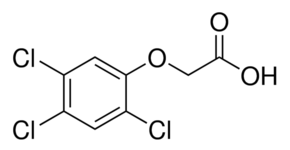
2,4, 5-T solution
Melting Point : Not applicable (solution form)
Molecular Weight : 255.49 g/mol Grams (g)
Molecular Formula : C8H6Cl3O3
Purity : Not applicable for solution (active ingredient concentration specific to formulation)
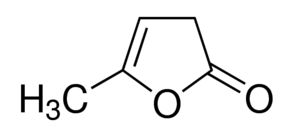
-Angelica lactone
Price 100 INR
Minimum Order Quantity : 1 Kilograms
Melting Point : 18.00 to 20.00 C. @ 760.00 mm Hg
Molecular Weight : 98.1 Grams (g)
Molecular Formula : C5H6O2
Purity : 97%
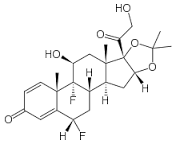
Fluocinolone acetonide
Price 100 INR
Minimum Order Quantity : 1 Kilograms
Melting Point : (C), 266268
Molecular Weight : 452.488 Grams (g)
Molecular Formula : C24H30F2O6
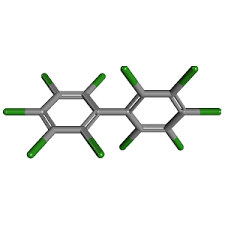
Decachlorobiphenyl solution
Price 100 INR
Minimum Order Quantity : 1 Kilograms
Melting Point : 305.8C
Molecular Weight : 498.6 Grams (g)
Molecular Formula : C12Cl10
Purity : 9%

 Send Inquiry
Our Products


Kesarkunj, Rm No. 9, Vasanji Lalji Road, Kandivali (W), Mumbai - 400067, Maharashtra, India

Mr Nilesh Shah
(Director)
Mobile :08071630254
 Send Inquiry
 Send SMS
Developed and Managed by Infocom Network Private Limited.
