
Call us now :08071630254
 Send Inquiry
 Send Inquiry
D--Tocotrienol
MOQ : 1 Kilograms
D--Tocotrienol Specification
- Molecular Weight
- 424.66 Grams (g)
- Molecular Formula
- C29H44O2
- Purity
- 98%
- Appearance
- Liquid
- Usage
- Tocotrienols are often found in natural sources such as palm or rice brain oil. People take tocotrienols by mouth for aging, Alzheimer's disease, clogged arteries, cancer, diabetes, a genetic disorder called familial dysautonomia, high cholesterol, kidney failure, and stroke.
D--Tocotrienol Trade Information
- Minimum Order Quantity
- 1 Kilograms
- Payment Terms
- Cash in Advance (CID), Cash Advance (CA)
- Supply Ability
- 500 Kilograms KG Per Month
- Delivery Time
- 2-8 Week
- Sample Available
- Yes
- Sample Policy
- Sample costs shipping and taxes has to be paid by the buyer
- Packaging Details
- Carton and Poly Bag.
- Main Export Market(s)
- Western Europe, Australia, Eastern Europe, Middle East, Central America, South America, Asia, North America, Africa
- Main Domestic Market
- All India
About D--Tocotrienol
D--Tocotrienol analytical reference material Synonym: (R-(all-E))-3,4-Dihydro-2,7,8-trimethyl-2-(4,8,12,16,20,24,28,32-octamethyl-3,7,11,15,19,23,27,31-tritriacontaoctaenyl)-2H-1-benzopyran-6-ol CAS Number 14101-61-2 Empirical Formula (Hill Notation) C28H42O2 Molecular Weight 410.63 Properties grade analytical reference material assay 95.0% (qNMR) 96.0% (HPLC) form neat shelf life limited shelf life, expiry date on the label application(s) HPLC: suitable gas chromatography (GC): suitable format neat storage temp. 2-8C Description Biochem/physiol Actions Tocotrienols are widely utilized for their strong antioxidant properties. The various isoforms of tocotrienols differ in their methyl substitution in the chromanol head.[] In addition to its antioxidant properties -tocotrienol has been shown to inhibit the NF-B activation pathway.[] -tocotrienol also acts as an inhibitor of HMG-CoA, the rate limiting enzyme in cholesterol biosynthesis.[]FAQs of D--Tocotrienol:
Q: What is the molecular weight of D--Tocotrienol?
A: The molecular weight of D--Tocotrienol is 424.66 grams (g).Q: What is the purity level of D--Tocotrienol?
A: The purity level of D--Tocotrienol is 98%.Q: What are some common uses of D--Tocotrienol?
A: D--Tocotrienol is commonly used for aging, Alzheimers disease, clogged arteries, cancer, diabetes, familial dysautonomia, high cholesterol, kidney failure, and stroke.Q: What is the molecular formula of D--Tocotrienol?
A: The molecular formula of D--Tocotrienol is C29H44O2.Q: What does D--Tocotrienol look like in terms of appearance?
A: D--Tocotrienol is a liquid in appearance.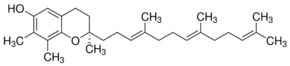
Tell us about your requirement

Price:
Quantity
Select Unit
- 50
- 100
- 200
- 250
- 500
- 1000+
Additional detail
Mobile number
Email

More Products in Analytical Grade Chemicals Category
![Benzo[b]naphtho[1,2-d]thiophene](https://cpimg.tistatic.com/03505604/b/5/Benzo-b-naphtho-1-2-d-thiophene.jpg)
Benzo[b]naphtho[1,2-d]thiophene
Molecular Formula : C12H8S
Appearance : Offwhite to pale yellow crystalline powder
Purity : 98% or higher
Melting Point : 150152C

Trimyristin
Price 100 INR
Minimum Order Quantity : 1 Kilograms
Molecular Formula : C45H86O6
Appearance : Whiteyellowish gray solid
Purity : 98%
Melting Point : 56–57 °C (133–135 °F; 329–330 K) at 760 mmHg
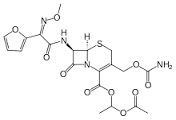
Cefuroxime
Price 100 INR
Minimum Order Quantity : 1 Kilograms
Molecular Formula : C20H22N4O10S
Appearance : White to Pale Yellow Solid
Purity : 98%
Melting Point : 108120°C

Vinyl acetate
Price 100 INR
Minimum Order Quantity : 1 Kilograms
Molecular Formula : C4H6O2
Melting Point : 93.5 °C (−136.3 °F; 179.7 K)

 Send Inquiry
Our Products


Kesarkunj, Rm No. 9, Vasanji Lalji Road, Kandivali (W), Mumbai - 400067, Maharashtra, India

Mr Nilesh Shah
(Director)
Mobile :08071630254
 Send Inquiry
 Send SMS
Developed and Managed by Infocom Network Private Limited.
