
Call us now :08071630254
 Send Inquiry
 Send Inquiry
Poly (tetrafluoroethylene)
MOQ : 1 Kilograms
Poly (tetrafluoroethylene) Specification
- Purity
- 99%
- Molecular Formula
- (C2F4)n
- Usage
- PTFE is used as a non-stick coating for pans and other cookware. It is nonreactive, partly because of the strength of carbonfluorine bonds, and so it is often used in containers and pipework for reactive and corrosive chemicals.
- Melting Point
- 326.8 C
- Molecular Weight
- 100.02 Grams (g)
Poly (tetrafluoroethylene) Trade Information
- Minimum Order Quantity
- 1 Kilograms
- Payment Terms
- Cash in Advance (CID), Cash Advance (CA)
- Supply Ability
- 500 Kilograms Per Month
- Delivery Time
- 2-8 Week
- Sample Available
- Yes
- Sample Policy
- Sample costs shipping and taxes has to be paid by the buyer
- Packaging Details
- Carton and Poly Bag.
- Main Export Market(s)
- Western Europe, Australia, Eastern Europe, Central America, Africa, Middle East, South America, Asia, North America
- Main Domestic Market
- All India
About Poly (tetrafluoroethylene)
Poly (tetrafluoroethylene), commonly known as PTFE, is a highly versatile material known for its exceptional non-stick properties and chemical inertness. With a molecular formula of (C2F4)n and a remarkable purity level of 99%, PTFE is ideal for applications that require resistance to reactive and corrosive chemicals. It is widely utilized as a non-stick coating for cookware, providing ease of use and maintenance. Additionally, PTFEs strong carbon-fluorine bonds ensure stability, making it suitable for containers and pipework used in industrial chemical handling. It exhibits a melting point of 326.8C and has a molecular weight of 100.02 grams (g), further affirming its robustness under high-temperature applications. As a reliable material, PTFE serves as a critical solution for demanding environments across various industries.
FAQs of Poly (tetrafluoroethylene):
Q: What are the primary uses of PTFE?
A: PTFE is used as a non-stick coating for cookware and in containers and pipework handling reactive and corrosive chemicals.Q: What is the purity level of PTFE?
A: PTFE has a purity level of 99%, making it highly reliable for industrial applications.Q: What is the melting point of PTFE?
A: The melting point of PTFE is 326.8C, allowing it to perform well under high temperatures.Q: Is PTFE chemically reactive?
A: No, PTFE is nonreactive due to the strength of its carbon-fluorine bonds.Q: What industries benefit from PTFE applications?
A: PTFE is widely utilized in cookware manufacturing, chemical processing, and industrial pipework systems.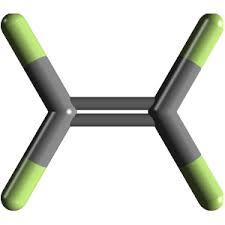
Tell us about your requirement

Price:
Quantity
Select Unit
- 50
- 100
- 200
- 250
- 500
- 1000+
Additional detail
Mobile number
Email

More Products in Analytical Grade Chemicals Category
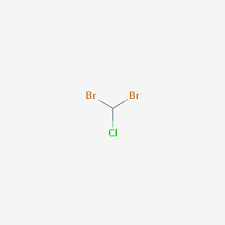
EPA 624 Calibration Mix 1
Appearance : Clear liquid
Molecular Formula : Varies (Mixture Components)
Molecular Weight : Varies (Mixture Components)
Melting Point : Not Applicable
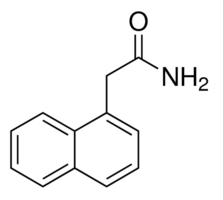
1- Naphthylacetamide
Price 100 INR
Minimum Order Quantity : 1 Kilograms
Appearance : White powder
Molecular Formula : C12H10O2
Molecular Weight : 186.2066 Grams (g)
Melting Point : 135 C
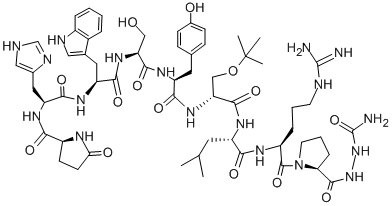
Goserelin for NMR identification
Price 100 INR
Minimum Order Quantity : 1 Kilograms
Appearance : White Solid
Molecular Formula : C59H84N18O14
Molecular Weight : 1269.410 Grams (g)
Melting Point : >170C (dec.)
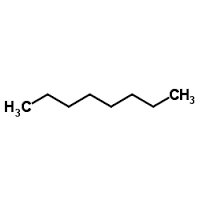
N-Octane
Price 100 INR
Minimum Order Quantity : 1 Kilograms
Appearance : Colorless liquid.
Molecular Formula : C8H18
Molecular Weight : 114.23 Grams (g)
Melting Point : 57 C

 Send Inquiry
Our Products


Kesarkunj, Rm No. 9, Vasanji Lalji Road, Kandivali (W), Mumbai - 400067, Maharashtra, India

Mr Nilesh Shah
(Director)
Mobile :08071630254
 Send Inquiry
 Send SMS
Developed and Managed by Infocom Network Private Limited.
