
Call us now :08071630254
 Send Inquiry
 Send Inquiry
Triclopyr
MOQ : 1 Kilograms
Triclopyr Specification
- Melting Point
- 148 C
- Appearance
- Fluffy solid
- Purity
- 96%
- Molecular Formula
- C7H4Cl3NO3
- Molecular Weight
- 256.46 Grams (g)
- Usage
- Triclopyr is used to control broadleaf weeds while leaving grasses and conifers unaffected or to control rust diseases on crops. Triclopyr is effective on woody plants and is used for brush control in rights of way and defoliation of wooded areas
Triclopyr Trade Information
- Minimum Order Quantity
- 1 Kilograms
- Payment Terms
- Cash in Advance (CID), Cash Advance (CA)
- Supply Ability
- 500 Kilograms KG Per Month
- Delivery Time
- 2-8 Week
- Sample Available
- Yes
- Sample Policy
- Sample costs shipping and taxes has to be paid by the buyer
- Packaging Details
- Carton and Poly Bag.
- Main Export Market(s)
- Eastern Europe, Middle East, Africa, Central America, Australia, South America, Western Europe, Asia, North America
- Main Domestic Market
- All India
About Triclopyr
Triclopyr is a powerful herbicide known for its ability to target and eliminate broadleaf weeds and woody plants effectively while leaving grasses and conifers unharmed. With a molecular formula of C7H4Cl3NO3 and a molecular weight of 256.46 grams (g), Triclopyr is ideal for brush control in rights-of-way, wooded areas, and crop protection against rust diseases. Featuring 96% purity and a melting point of 148 C, this fluffy solid ensures consistent and reliable performance across diverse application scenarios. Triclopyr is widely used in agriculture, forestry, and landscaping to maintain healthy vegetation and protected environments.
FAQs of Triclopyr:
Q: What is the primary use of Triclopyr?
A: Triclopyr is used to control broadleaf weeds, woody plants, and rust diseases on crops while leaving grasses and conifers unaffected.Q: Is Triclopyr suitable for brush control in rights-of-way?
A: Yes, Triclopyr is highly effective for brush control in rights-of-way and wooded areas.Q: What is the purity of Triclopyr?
A: Triclopyr has a purity of 96%, ensuring reliable and consistent performance.Q: What is the physical form of Triclopyr?
A: Triclopyr appears as a fluffy solid.Q: At what temperature does Triclopyr melt?
A: Triclopyr has a melting point of 148 C.
Tell us about your requirement

Price:
Quantity
Select Unit
- 50
- 100
- 200
- 250
- 500
- 1000+
Additional detail
Mobile number
Email

More Products in Analytical Grade Chemicals Category
100ppm Cr, Cd, Pb, Ag in SiO2
Appearance : Fine powder
Molecular Formula : SiO2 + Cr Cd Pb Ag (100ppm each)
Purity : 99.99% pure SiO2 with 100 ppm trace metals
Melting Point : > 1600C (for SiO2 base material)

Benzylpenicillin sodium
Price 100 INR
Minimum Order Quantity : 1 Kilograms
Appearance : White crystals or powder
Molecular Formula : C16H18N2O4S
Melting Point : 8283 C
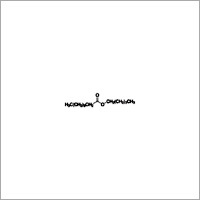
Amyl hexanoate
Price 100 INR
Minimum Order Quantity : 1 Kilograms
Appearance : Colorless clear liquid
Molecular Formula : C11H22O2
Purity : 98%
Melting Point : 47.00 C. @ 760.00 mm Hg

Tripropionin
Price 100 INR
Minimum Order Quantity : 1 Kilograms
Appearance : Clear colorless Liquid
Molecular Formula : C12H20O6
Purity : 95%

 Send Inquiry
Our Products


Kesarkunj, Rm No. 9, Vasanji Lalji Road, Kandivali (W), Mumbai - 400067, Maharashtra, India

Mr Nilesh Shah
(Director)
Mobile :08071630254
 Send Inquiry
 Send SMS
 Call Me Free
Developed and Managed by Infocom Network Private Limited.
