
Call us now :07971189995
 Send Inquiry
 Send Inquiry
Trifluoroacetic acid
MOQ : 1 Kilograms
Trifluoroacetic acid Specification
- Molecular Formula
- C2HF3O2
- Melting Point
- -15.4 C
- Molecular Weight
- 114.02 Grams (g)
- Solubility
- Miscible
- Usage
- Used to make other chemicals and as a solvent. At a low concentration, trifluoroacetic acid (TFA) is used as an ion pairing agent in liquid chromatography (HPLC) of organic compounds, particularly peptides and small proteins. TFA is a versatile solvent for NMR spectroscopy (for materials stable in acid).
Trifluoroacetic acid Trade Information
- Minimum Order Quantity
- 1 Kilograms
- Payment Terms
- Cash in Advance (CID), Cash Advance (CA)
- Supply Ability
- 500 Kilograms KG Per Month
- Delivery Time
- 2-8 Week
- Sample Available
- Yes
- Sample Policy
- Sample costs shipping and taxes has to be paid by the buyer
- Packaging Details
- Carton and Poly Bag.
- Main Export Market(s)
- Australia, Central America, Africa, Middle East, South America, Western Europe, Asia, Eastern Europe, North America
- Main Domestic Market
- All India
About Trifluoroacetic acid
Trifluoroacetic acid (TFA) is a widely used chemical renowned for its versatility and precision in various applications. Featuring a molecular formula of C2HF3O2 and a molecular weight of 114.02 grams, TFA exhibits exceptional qualities as a solvent and reagent. With a melting point of -15.4 C, it is miscible in numerous solutions, ensuring compatibility across diverse environments. Frequently employed in the synthesis of other chemicals and in analytical research, TFA serves as a vital ion-pairing agent in High-Performance Liquid Chromatography (HPLC), particularly for analyzing organic compounds such as peptides and small proteins. Furthermore, its adaptability as a solvent makes it suitable for nuclear magnetic resonance (NMR) spectroscopy when working with acid-stable substances.
FAQs of Trifluoroacetic acid:
Q: What is the primary usage of Trifluoroacetic acid?
A: Trifluoroacetic acid is primarily used to make other chemicals, as a solvent, and as an ion-pairing agent in HPLC for analyzing peptides and small proteins.Q: Can Trifluoroacetic acid be used in NMR spectroscopy?
A: Yes, TFA is a versatile solvent for NMR spectroscopy, provided the materials are stable in acidic conditions.Q: What is the molecular weight of Trifluoroacetic acid?
A: The molecular weight of Trifluoroacetic acid is 114.02 grams.Q: Is Trifluoroacetic acid fully miscible in solutions?
A: Yes, Trifluoroacetic acid is miscible, ensuring compatibility with various solvents.Q: At what temperature does Trifluoroacetic acid melt?
A: The melting point of Trifluoroacetic acid is -15.4 C.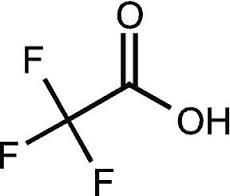
Tell us about your requirement

Price:
Quantity
Select Unit
- 50
- 100
- 200
- 250
- 500
- 1000+
Additional detail
Mobile number
Email

More Products in Analytical Grade Chemicals Category
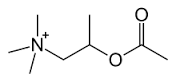
Carbachol
Price 100 INR
Minimum Order Quantity : 1 Kilograms
Molecular Weight : 182.696 Grams (g)
Molecular Formula : C6H15ClN2O2
Purity : 98%
Melting Point : (C), 208210
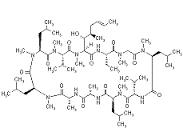
Ciclosporin
Price 100 INR
Minimum Order Quantity : 1 Kilograms
Molecular Weight : 1202.61 Grams (g)
Molecular Formula : C62H111N11O12
Purity : 99%
Melting Point : 148151C
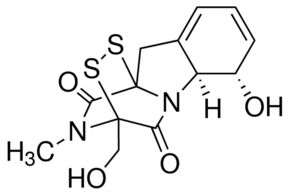
Gliotoxin solution
Price 100 INR
Minimum Order Quantity : 1 Kilograms
Molecular Weight : 326.39 Grams (g)
Molecular Formula : C13H14N2O4S2
Purity : 97%
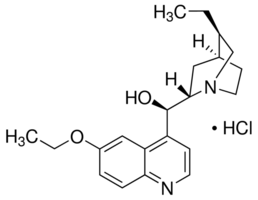
Ethylmorphine hydrochloride - reference spectrum
Price 100 INR
Minimum Order Quantity : 1 , , Kilograms
Molecular Weight : 349.8 Grams (g)
Molecular Formula : C19H24ClNO3
Purity : 98%
Melting Point : 188o192oC

 Send Inquiry
Our Products


Kesarkunj, Rm No. 9, Vasanji Lalji Road, Kandivali (W), Mumbai - 400067, Maharashtra, India

Mr Nilesh Shah
(Director)
Mobile :07971189995
 Send Inquiry
 Send SMS
 Call Me Free
Developed and Managed by Infocom Network Private Limited.
