
Call us now :08071630254
 Send Inquiry
 Send Inquiry
C1-C6 n-Paraffins
MOQ : 1 Kilograms
C1-C6 n-Paraffins Specification
- Density
- 0.673 Gram per cubic centimeter(g/cm3)
- Usage
- Commonly used in industrial applications chemical synthesis and as laboratory solvents
- Properties
- Chemical stability low reactivity hydrophobic nature and volatility (depending on chain length)
- Physical Form
- Colorless liquid or gas (depending on the specific paraffin)
- Grade
- Industrial technical or laboratory grade
- Appearance
- Colorless and clear
- Refractive Rate
- 1.37 - 1.43
- CAS No
- Various depending on the specific compound (e.g. CH4 CAS: 74-82-8; C6H14 CAS: 110-54-3)
- Molecular Weight
- 16.04 - 86.18 g/mol
- Shape
- N/A (liquid/gas form)
- Purity
- >95% (typical for refined n-paraffins)
- Storage
- Store in tightly closed containers in a cool dry and well-ventilated area away from heat or sources of ignition
- Solubility
- Insoluble in water; soluble in non-polar organic solvents
- Structural Formula
- Linear hydrocarbon chains (CH3-(CH2)n-CH3)
- Molecular Formula
- C1H4 - C6H14
- Smell
- Mild hydrocarbon-like smell
- EINECS No
- Varies based on compound (e.g. Methane: 200-812-7 Hexane: 203-777-6)
- HS Code
- 2710.19.99
- Application
- Used as raw materials in petrochemicals solvents lab reagents and fuel blending
- Ingredients
- Mixture of linear alkanes from methane (C1) to hexane (C6)
- Melting Point
- -183C to -94C
- Shelf Life
- Indefinite under proper storage conditions
- Ph Level
- Neutral (7.0)
- Taste
- Odorless and tasteless
- Poisonous
- NO
About C1-C6 n-Paraffins
C1-C6 n-Paraffins15ppm each component in nitrogen, aerosol can of 4L, analytical standard grade analytical standard form gas packaging aerosol can of 4L concentration 15ppm each component in nitrogen application(s) HPLC: suitable gas chromatography (GC): suitableFAQs of C1-C6 n-Paraffins:
Q: What are the primary applications of C1-C6 n-Paraffins?
A: C1-C6 n-Paraffins are commonly used as raw materials in petrochemicals, solvents, laboratory reagents, and fuel blending. They also find extensive usage in industrial applications, chemical synthesis, and as laboratory solvents.Q: How should C1-C6 n-Paraffins be stored?
A: C1-C6 n-Paraffins should be stored in tightly closed containers in a cool, dry, and well-ventilated area, away from heat or sources of ignition.Q: What are the key properties of C1-C6 n-Paraffins?
A: C1-C6 n-Paraffins exhibit chemical stability, low reactivity, hydrophobic nature, and volatility (depending on the chain length).Q: Are C1-C6 n-Paraffins poisonous or harmful?
A: No, C1-C6 n-Paraffins are not poisonous when handled correctly.Q: What is the solubility of C1-C6 n-Paraffins?
A: C1-C6 n-Paraffins are insoluble in water but are soluble in non-polar organic solvents.Q: Does C1-C6 n-Paraffins have a specific shelf life?
A: C1-C6 n-Paraffins have an indefinite shelf life under proper storage conditions.Q: What is the molecular formula and molecular weight range of C1-C6 n-Paraffins?
A: The molecular formula ranges from C1H4 to C6H14, and the molecular weight varies from 16.04 to 86.18 g/mol.
Tell us about your requirement

Price:
Quantity
Select Unit
- 50
- 100
- 200
- 250
- 500
- 1000+
Additional detail
Mobile number
Email

More Products in Analytical Grade Chemicals Category

Benzodiazepine Multi-component Mixture-8 solution
Molecular Weight : Variable (mixture of compounds)
Appearance : Clear liquid solution
Melting Point : Not applicable (solution)
Molecular Formula : Variable (multicomponent mixture)
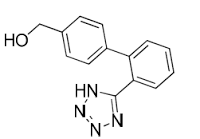
Irbesartan impurity A
Price 100 INR
Minimum Order Quantity : 1 Kilograms
Molecular Weight : 446.54 Grams (g)
Appearance : White Solid
Melting Point : 180184C
Bacopasaponin C
Price 100 INR
Minimum Order Quantity : 1 Kilograms
Molecular Weight : 899.1 Grams (g)
Appearance : White powder.
Molecular Formula : C46H74O17
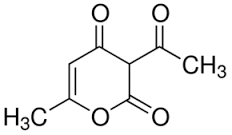
Dehydroacetic acid
Price 100 INR
Minimum Order Quantity : 1 Kilograms
Molecular Weight : 168.1467 Grams (g)
Appearance : White crystals
Melting Point : 109 °C; 228 °F; 382 K
Molecular Formula : C8H8O4

 Send Inquiry
Our Products


Kesarkunj, Rm No. 9, Vasanji Lalji Road, Kandivali (W), Mumbai - 400067, Maharashtra, India

Mr Nilesh Shah
(Director)
Mobile :08071630254
 Send Inquiry
 Send SMS
Developed and Managed by Infocom Network Private Limited.
