
Call us now :08071630254
 Send Inquiry
 Send Inquiry
Cavitron and CAVASOL* hydroxypropyl-- and hydroxypropyl--cyclodextrins (HPBCD and HPGCD)
Cavitron and CAVASOL* hydroxypropyl-- and hydroxypropyl--cyclodextrins (HPBCD and HPGCD) Specification
- Packaging Type
- HDPE drums, PE bags, Customized packaging
- Melting Point
- Decomposes above 280C
- Physical State
- Solid
- Molecular Weight
- 1380 (HPBCD), 1550 (HPGCD)
- Shelf Life
- 24 months
- Storage Instructions
- Store in a cool, dry, and well-ventilated place, tightly closed
- Size
- Customized as per requirement
- Ph Level
- 5.0 - 8.0 (1% aqueous solution)
- CAS No
- 128446-35-5 (HPBCD), 128446-36-6 (HPGCD)
- Molecular Formula
- (C42H70-nO35(C3H6O)n) (HPBCD); (C48H80-nO40(C3H6O)n) (HPGCD)
- Usage
- Solubilizing agent, excipient, stabilizer
- Density
- 0.60 Gram per cubic centimeter(g/cm3)
- Purity
- >98%
- Grade
- Pharmaceutical Grade
- Type
- Hydroxypropyl--cyclodextrin (HPBCD) and Hydroxypropyl--cyclodextrin (HPGCD)
- Application
- Pharmaceutical, food, cosmetics, analytical reagent
- Appearance
- White to off-white, amorphous powder
- Purity(%)
- >98%
- Stability
- Stable under recommended storage conditions
- Residual Solvents
- Complies with ICH guidelines
- Bacterial Endotoxins
- <0.25 EU/mg
- Loss on Drying
- Not more than 5.0%
- Identification
- Complies with Ph. Eur./USP
- Heavy Metals
- <10 ppm
- Solubility
- Freely soluble in water, slightly soluble in ethanol and methanol
- Odor
- Odorless
Cavitron and CAVASOL* hydroxypropyl-- and hydroxypropyl--cyclodextrins (HPBCD and HPGCD) Trade Information
- Payment Terms
- Telegraphic Transfer (T/T), Cash in Advance (CID), Cash Advance (CA)
- Main Export Market(s)
- Western Europe, Australia, North America, South America, Eastern Europe, Middle East, Central America, Asia, Africa
About Cavitron and CAVASOL* hydroxypropyl-- and hydroxypropyl--cyclodextrins (HPBCD and HPGCD)
CavitronAAA and CAVASOL* hydroxypropyl-AA- and hydroxypropyl-AA3-cyclodextrins (HPBCD and HPGCD)
Chemistry: Cyclodextrins
The molecular structure of cyclodextrins creates a bucket-like cavity that can function to complex with molecules or functional groups on molecules. The substitution of hydroxyl groups on native cyclodextrins to make hydroxypropyl-AA- or hydroxypropyl-AA3-cyclodextrins (HPBCD or HBGCD) significantly enhances their solubility and makes them more suitable for drug solubilization. This mechanism makes the Cavitron and CAVASOL HPBCDs and HPGCDs capable of masking unpleasant taste/odor and stabilizing drugs that are prone to degradation, and also can increase solubility of poorly soluble compounds in oral drug delivery systems. Purification of the Cavitron cyclodextrins to remove endotoxins allows their use for solubilization of drugs for parenteral drug products.
Exceptional Solubility and Purity
Cavitron and CAVASOL* HPBCD and HPGCD dissolve readily in water, making them highly effective for improving the solubility of poorly soluble compounds. They are manufactured to surpass 98% purity, ensuring both efficacy and safety in sensitive pharmaceutical, food, and cosmetic applications. Their odorless and stable profile complements diverse formulation needs while maintaining product quality.
Regulatory Compliance and Safety
These cyclodextrins comply with Ph. Eur., USP, and ICH standards, ensuring low levels of impurities such as heavy metals and endotoxins. With bacterial endotoxins below 0.25 EU/mg and heavy metals under 10 ppm, these materials are exceptionally safe for end-product use. Pharmaceutical-grade quality and proper identification protocols further reinforce reliability.
Versatile Applications Across Industries
HPBCD and HPGCD serve as solubilizing agents, excipients, stabilizers, and analytical reagents, benefiting pharmaceutical, food, and cosmetic industries alike. Their high stability, customizable packaging, and adaptable particle size enable convenient integration into different formulations, tools, and production environments.
FAQ's of Cavitron and CAVASOL* hydroxypropyl-A- and hydroxypropyl-AA3-cyclodextrins (HPBCD and HPGCD):
Q: How do Cavitron and CAVASOL* cyclodextrins improve solubility in formulations?
A: Cavitron and CAVASOL* HPBCD and HPGCD significantly enhance the solubility of poorly water-soluble substances by forming inclusion complexes. These complexes can increase the bioavailability, stability, and dispersibility of active ingredients in pharmaceutical, food, and cosmetic formulations.Q: What grade and purity are Cavitron and CAVASOL* HPBCD and HPGCD?
A: Both products are pharmaceutical grade with a purity exceeding 98%. This ensures suitability for sensitive formulations in pharmaceuticals, foods, and cosmetics, meeting stringent international standards (Ph. Eur., USP, and ICH guidelines).Q: When should these cyclodextrins be used in a formulation process?
A: They should be incorporated during the formulation stage whenever there is a need to improve solubility, stability, or taste-masking properties of active compounds. Their use is particularly important for hydrophobic substances to increase efficacy and shelf-life.Q: Where are these cyclodextrins typically applied?
A: HPBCD and HPGCD are widely applied in pharmaceuticals (as solubilizers and stabilizers), the food industry (as carriers or flavor protectors), cosmetics (to stabilize and solubilize active ingredients), and for analytical purposes as reagents.Q: What are the benefits of using HPBCD and HPGCD over regular cyclodextrins?
A: Hydroxypropyl substitution enhances water solubility and safety profile compared to native cyclodextrins, providing better encapsulation efficiency, lower toxicity, and broader compatibility across diverse formulation matrices.Q: How should Cavitron and CAVASOL* cyclodextrins be stored and handled?
A: They should be stored in a tightly closed container within a cool, dry, and well-ventilated area to maintain their stability and prolong shelf life (up to 24 months). Packaging options include HDPE drums and PE bags, with customization available based on requirements.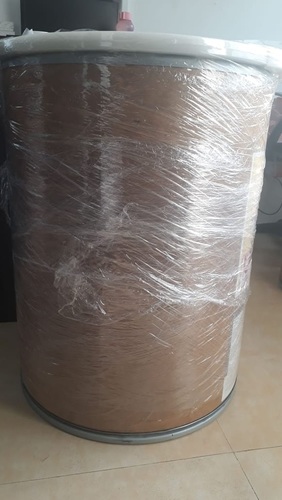
Tell us about your requirement

Price:
Quantity
Select Unit
- 50
- 100
- 200
- 250
- 500
- 1000+
Additional detail
Mobile number
Email

More Products in Parenteral Dosage Form Category
Aqualon Sodium Carboxymethylcellulose Chemistry: Cellulosics
Molecular Formula : C8H15NaO8
Purity : 99%
Usage : Thickening agent, stabilizer, binder, rheology modifier
Density : 1.2 Gram per cubic centimeter(g/cm3)
Purity(%) : 99%
CAS No : 9004324
Pharmasolve N-methyl-2-pyrrolidone
Molecular Formula : C5H9NO
Purity : 99.9%
Usage : Pharmaceutical excipient, solvent for APIs
Density : 1.03 Gram per cubic centimeter(g/cm3)
Purity(%) : 99.9%
CAS No : 872504
Plasdone povidone C grades
Molecular Formula : (C6H9NO)n
Purity : >99%
Usage : Filmforming agent, binder, stabilizer
Density : 1.20 Gram per cubic centimeter(g/cm3)
Purity(%) : >99.0
CAS No : 9003398

 Send Inquiry
Our Products


Kesarkunj, Rm No. 9, Vasanji Lalji Road, Kandivali (W), Mumbai - 400067, Maharashtra, India

Mr Nilesh Shah
(Director)
Mobile :08071630254
 Send Inquiry
 Send SMS
Developed and Managed by Infocom Network Private Limited.
